


Solar Photovoltaic Module Recycling Facility
Date:2026-09-18 Categories:Blog
As global solar power capacity continues to expand, the number of damaged, defective, upgraded, and end-of-life photovoltaic modules is also increasing. Solar Photovoltaic Module Recycling Facility can recover valuable materials from discarded panels while reducing waste and supporting a circular solar industry. Modern recycling technologies can process different module types, including crystalline-silicon and thin-film photovoltaic modules, although the recycling process should be selected according to the module composition.
What Types of Solar Photovoltaic Modules Can Be Recycled?
Solar photovoltaic modules can generally be divided into several major categories:
- Monocrystalline Silicon Modules – These modules use monocrystalline silicon cells and are widely used in residential, commercial, and utility-scale solar systems.
- Polycrystalline Silicon Modules – These use polycrystalline silicon cells and have historically been widely installed in solar projects.
- Cadmium Telluride (CdTe) Thin-Film Modules – CdTe is one of the major thin-film technologies. Its semiconductor materials require a recycling process different from conventional crystalline-silicon modules.
- CIGS Thin-Film Modules – Copper indium gallium selenide modules contain different semiconductor materials and therefore require appropriate separation and material recovery technologies.
Because module structures and materials differ, a recycling facility should first identify the incoming panel type before selecting its processing technology.
What Is a Solar Photovoltaic Module Recycling Facility?
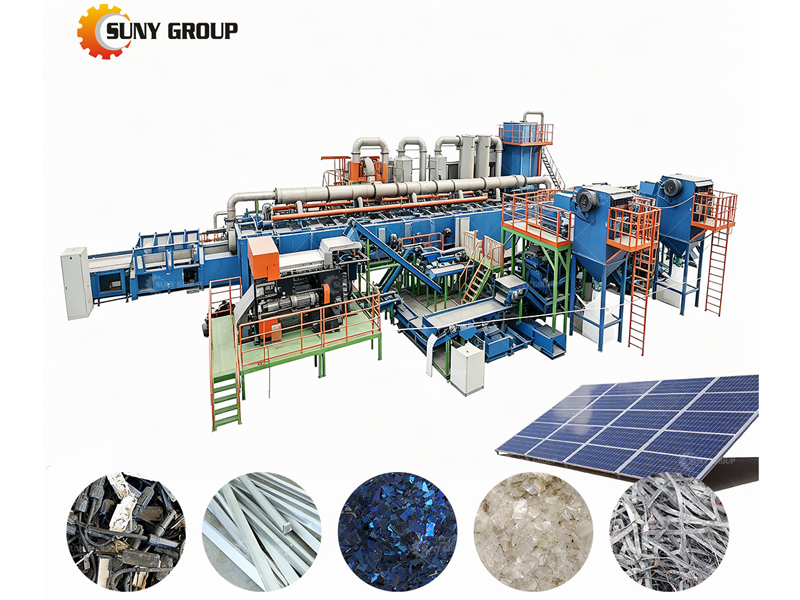
A solar photovoltaic module recycling facility is an industrial system designed to dismantle, separate, process, and recover useful materials from end-of-life solar panels.
For crystalline-silicon modules, a typical facility can include:
Panel Inspection → Frame Removal → Junction Box and Cable Removal → Glass Separation → Crushing → Screening → Metal Separation → Fine Material Recovery
Mechanical recycling remains an important commercial approach for crystalline-silicon modules. Thermal and chemical processes can also be combined with mechanical treatment when higher recovery rates or material purities are required.
Thin-film modules require different processing because their semiconductor layers can contain materials such as cadmium and tellurium. Dedicated thin-film recycling systems can therefore include additional separation and purification stages.
How to Build a Solar Panel Recycling Facility?
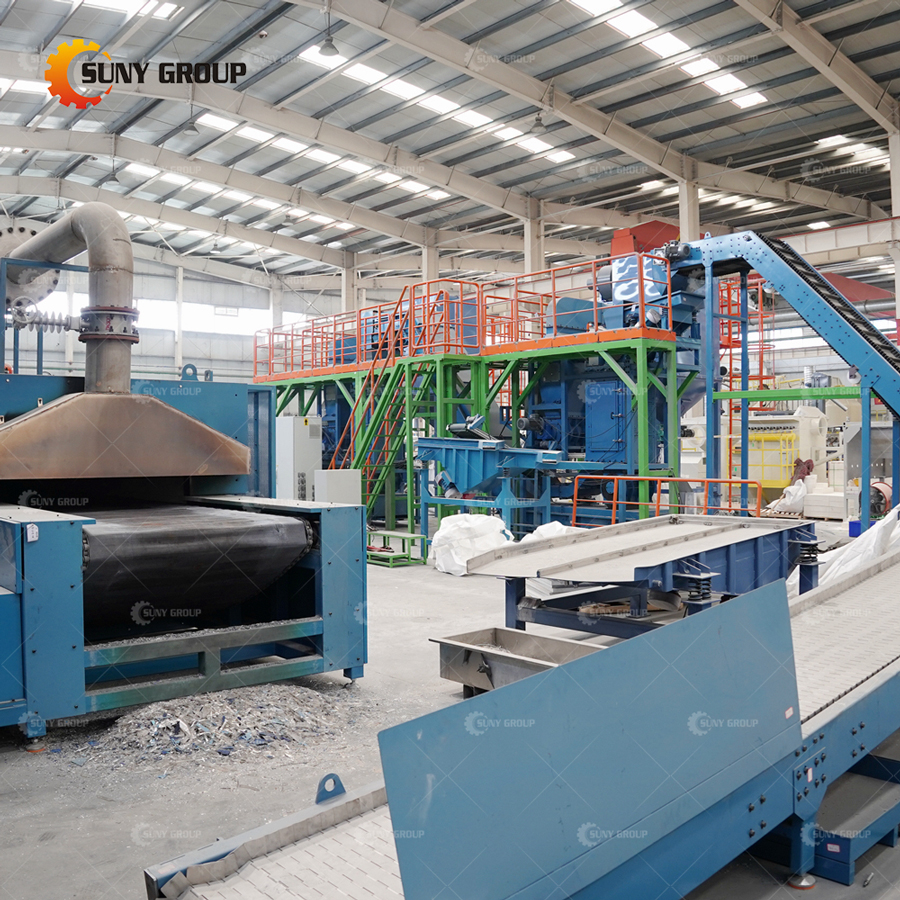
Before establishing a solar panel recycling plant, investors should evaluate several factors:
- Determine the feedstock: Identify whether the plant will mainly process monocrystalline, polycrystalline, CdTe, CIGS, or mixed modules.
- Set the processing capacity: Choose equipment according to the expected daily or annual volume of waste panels.
- Design the recycling process: A basic plant may focus on frame, glass, copper, and cable recovery, while an advanced facility can add delamination and further silicon and metal recovery.
- Install suitable equipment: Equipment may include frame dismantling machines, cable and junction-box removal equipment, shredders, crushers, vibrating screens, magnetic separators, eddy-current separators, air separators, and material collection systems.
- Plan environmental protection: Dust collection, noise control, safe material storage, wastewater management where applicable, and proper handling of hazardous or regulated residues should be incorporated into the plant design.
- Check local regulations: Permits, waste classifications, worker protection requirements, and transportation rules vary by country and region. For example, Japan enacted legislation concerning the recycling of photovoltaic waste in 2026.
What Materials Can Be Recovered?
A properly designed solar photovoltaic module recycling facility can recover several valuable materials. Glass represents the largest portion of a typical crystalline-silicon panel by weight, while aluminum frames and copper components are also readily recoverable. Solar cells contain silicon and smaller quantities of valuable metals such as silver.
The main recovered products include:
- Glass: Used in construction materials, glass manufacturing, and other glass products.
- Aluminum: Sent to aluminum smelters for producing new aluminum products.
- Copper: Reused in cables, electrical components, and copper products.
- Silicon: Can potentially be further processed for reuse in solar or other industrial applications.
- Silver: Recovered through advanced processes and returned to metal-processing supply chains.
- Plastic/EVA materials: Depending on the technology, these may be separated for further treatment or appropriate disposal.
- Thin-film semiconductor materials: CdTe and other specialty materials can be recovered through dedicated technologies.
Solar Photovoltaic Module Recycling Facility can be designed around mechanical separation for conventional crystalline-silicon panels or more advanced thermal and chemical processes for higher-value material recovery and thin-film modules. By properly separating glass, aluminum, copper, silicon, silver, and specialty materials, a solar panel recycling plant can transform end-of-life photovoltaic modules into useful secondary resources. As the installed solar base grows, investing in efficient and properly regulated solar photovoltaic module recycling infrastructure can support material recovery and the development of a more circular photovoltaic industry.