


Solar Panel Recycling Processes and Methods
Solar panel recycling is becoming increasingly important as solar power installations expand worldwide. Waste photovoltaic (PV) panels mainly come from decommissioned solar farms, rooftop solar systems, damaged panels caused by storms or transportation, and manufacturing defects. As more installations reach the end of their service life, efficient recycling is essential for recovering valuable resources and reducing environmental impacts.
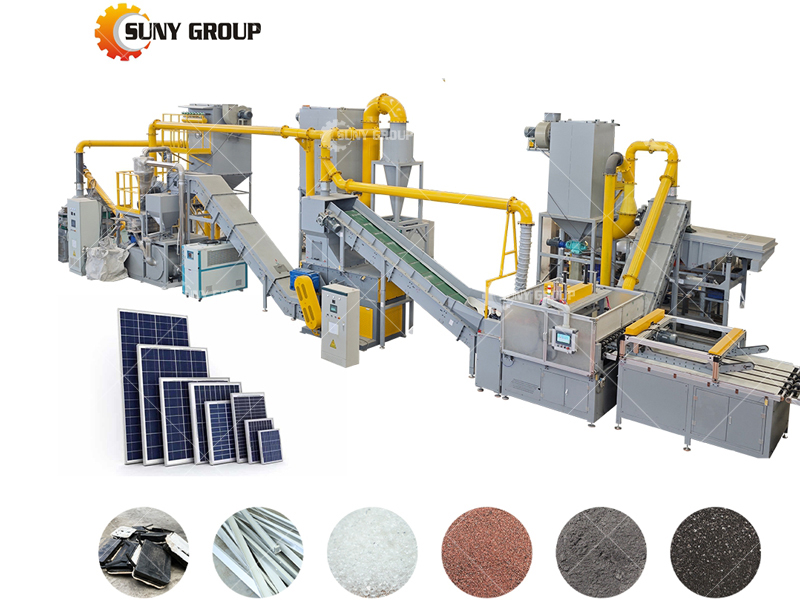
Solar Panel Recycling Processes and Methods
1. What Are Solar Panels Made Of?
Most conventional crystalline silicon solar panels contain several recyclable materials:
- Glass: Usually the largest component by weight, suitable for glass manufacturing and other applications when sufficient purity is achieved.
- Aluminum Frames: Easily recovered and recycled into new aluminum products.
- Silicon Solar Cells: Contain silicon and small amounts of valuable metals, including silver.
- Copper: Found in cables, ribbons, and electrical connections.
- Polymers: EVA encapsulant and backsheet materials protect the cells but make separation more difficult.
- Junction Boxes and Other Metals: Contain electrical components and recoverable metal fractions.
Thin-film panels, such as cadmium telluride (CdTe) modules, have different material compositions and require specialized recycling methods. Therefore, identifying panel types before processing is essential.
2. Main Solar Panel Recycling Processes and Methods
Mechanical Recycling
Mechanical recycling is a widely used commercial approach for crystalline silicon panels. It involves removing the aluminum frame and junction box, followed by delamination, crushing, shredding, screening, and physical separation.
Advantages: Relatively straightforward, scalable, and suitable for recovering bulk glass, aluminum, copper, and other material fractions.
Disadvantages: Crushing can contaminate the glass with polymers and metals. Recovering high-purity silicon and silver is difficult without additional processing.
Thermal Recycling
Thermal recycling uses controlled heating to break down EVA encapsulant and other polymer layers, allowing glass, solar cells, and metals to be separated more effectively.
Advantages: Can improve delamination and facilitate the recovery of silicon wafers and valuable metals.
Disadvantages: Requires energy and effective exhaust-gas treatment. Improper operation may generate hazardous emissions, so temperature control and environmental protection are essential.
Chemical Recycling
Chemical recycling uses suitable solvents, leaching agents, and purification processes to remove encapsulants or dissolve selected metals from processed panels.
Advantages: Can recover silver, silicon-related materials, and other valuable metals at higher purity levels, depending on the process.
Disadvantages: Chemical consumption, wastewater treatment, operating costs, and reagent management can complicate large-scale implementation.
Integrated Recycling
Integrated recycling combines mechanical separation with thermal or chemical treatment. It is increasingly important for facilities seeking to recover both bulk materials and higher-value components. The appropriate combination depends on panel chemistry, target product quality, investment budget, and environmental requirements.
3. Detailed Solar Panel Recycling Process
A typical solar panel recycling plant follows these steps:
- Inspection and Sorting: Identify crystalline silicon or thin-film panels and separate damaged or unsuitable units.
- Frame and Junction Box Removal: Use dedicated equipment to recover aluminum frames, cables, and electrical components.
- Glass and Laminate Separation: Apply mechanical delamination, controlled thermal treatment, or suitable chemical techniques to release the glass and encapsulated cells.
- Crushing and Shredding: Reduce remaining materials to appropriate particle sizes when intact component recovery is not required.
- Screening and Separation: Use vibrating screens, magnetic separators, air classifiers, and other separation equipment to divide material fractions.
- Metal and Silicon Recovery: Process metal-rich fractions using appropriate refining technologies to recover copper, silver, and other valuable materials.
- Purification and Quality Control: Remove contaminants and test recovered materials before sending them to downstream manufacturers.
The final products may include aluminum, glass, copper, silicon-rich fractions, silver-bearing materials, and separated polymers. Actual recovery rates and product purity depend on the technology and feedstock.
4. Advantages and Future Improvements
An efficient solar panel recycling system reduces landfill waste, conserves natural resources, and creates additional revenue streams from recovered materials. It also supports a circular economy by returning secondary raw materials to manufacturing.
Future improvements include automated frame removal, more precise delamination, intelligent material sorting, lower-energy thermal processes, improved chemical recovery, and better dust and wastewater treatment. Combining these technologies can improve material purity and recovery efficiency while controlling operating costs.
In conclusion, choosing the right solar panel recycling process requires balancing recovery efficiency, product quality, investment, and environmental performance. A well-designed solar panel recycling plant can transform end-of-life PV modules into valuable resources and support the long-term sustainability of the solar energy industry.
Next: