


PV Panel Thermal Recycling Line
1. What Is a PV Panel Thermal Recycling Line?
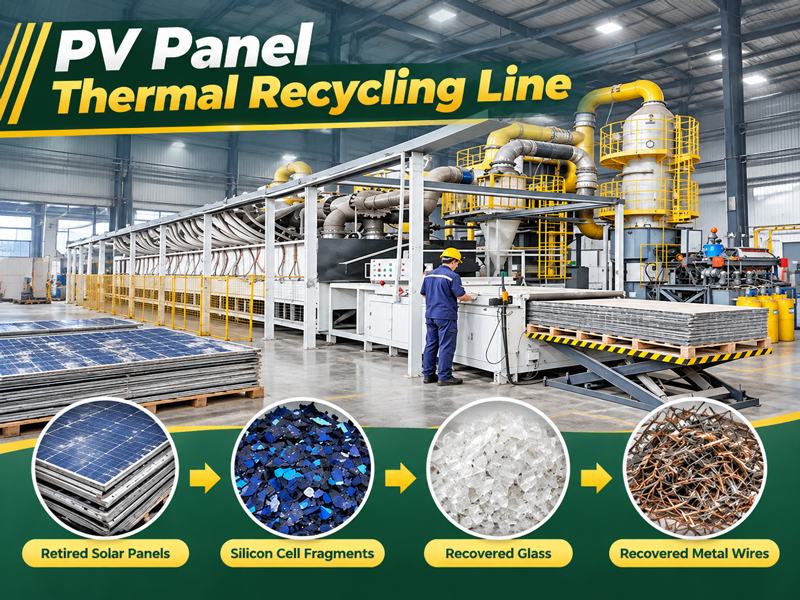
PV Panel Thermal Recycling Line is a specialized recycling system designed to process end-of-life photovoltaic (PV) panels and recover valuable materials such as glass, silicon, aluminum, copper, and other metals. As solar energy installations continue to expand worldwide, the number of retired solar panels is also increasing. Efficient recycling helps reduce landfill waste, conserve natural resources, and support the development of a circular solar industry.
Most conventional crystalline silicon solar panels consist of a glass layer, aluminum frame, encapsulant materials such as EVA, silicon solar cells, copper ribbons, and a polymer backsheet or second glass layer. These materials are bonded together to ensure long-term durability, making efficient separation challenging when the panels reach the end of their service life.
A PV Panel Thermal Recycling Line uses controlled heating to soften or decompose the polymer encapsulant, helping separate the laminated layers and improve the recovery of reusable materials. Combined with mechanical processing and sorting equipment, thermal recycling provides an effective solution for treating different types of retired PV modules.
2. Why Is Thermal Recycling Important for PV Panels?
Solar panels typically operate for approximately 25–30 years, although actual service life varies depending on product quality and operating conditions. As early solar installations approach retirement, recycling capacity is becoming increasingly important.
Thermal recycling offers several advantages:
- Efficient layer separation: Controlled heating helps break down or remove EVA and other polymer encapsulants that bond glass and solar cells together.
- Glass recovery: Separating the glass layer allows it to be collected for appropriate reuse or further processing.
- Silicon recovery: Recovered silicon cells and fragments can be directed to suitable downstream processes for purification or material recovery.
- Metal recovery: Aluminum frames, copper ribbons, and other metal-containing fractions can be recovered through dismantling and mechanical separation.
- Waste reduction: Recovering reusable materials reduces the amount of PV waste requiring final disposal.
- Resource conservation: Recycled materials can supplement virgin raw materials in suitable manufacturing applications.
The actual recovery rate and product quality depend on panel construction, thermal conditions, equipment configuration, and downstream processing technology.
3. How Does a PV Panel Thermal Recycling Line Work?
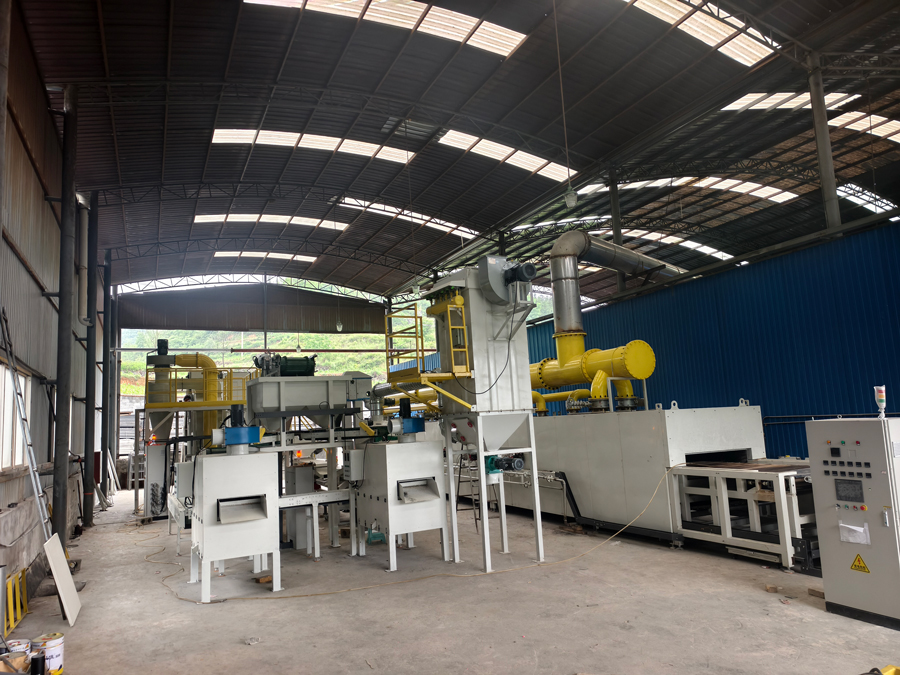
A complete PV Panel Thermal Recycling Line typically combines pre-treatment, thermal delamination, and material separation.
Step 1: Inspection and Aluminum Frame Removal
Retired solar panels are inspected to identify their type, condition, and construction. The aluminum frame and junction box are removed using suitable dismantling equipment. Cables and other accessible components can also be separated for independent recycling.
Step 2: Thermal Treatment
The prepared panels or laminated components enter a controlled thermal treatment system. Heating helps soften or decompose the encapsulant materials, depending on the selected process conditions. Temperature, residence time, and ventilation must be controlled to ensure safe and effective operation.
Step 3: Glass and Solar Cell Separation
After thermal treatment, the loosened layers can be separated through suitable mechanical methods. The glass fraction is collected, while silicon cells, metal ribbons, and remaining laminated materials are directed to subsequent processing stages.
Step 4: Crushing and Screening
Selected fractions may be crushed or granulated to release additional materials. Screening equipment classifies particles by size, preparing them for further separation and recovery.
Step 5: Metal Separation
Magnetic separators can recover suitable ferrous metals, while eddy current separators can separate certain non-ferrous conductive metals. Additional sorting and refining processes may be required to recover copper and other valuable components from mixed fractions.
Step 6: Final Material Collection
The processed materials are collected separately for storage, sale, or further treatment. Silicon-containing fractions may require additional chemical or physical purification before they can be reused in higher-value applications.
4. Main Equipment in a PV Panel Thermal Recycling Line
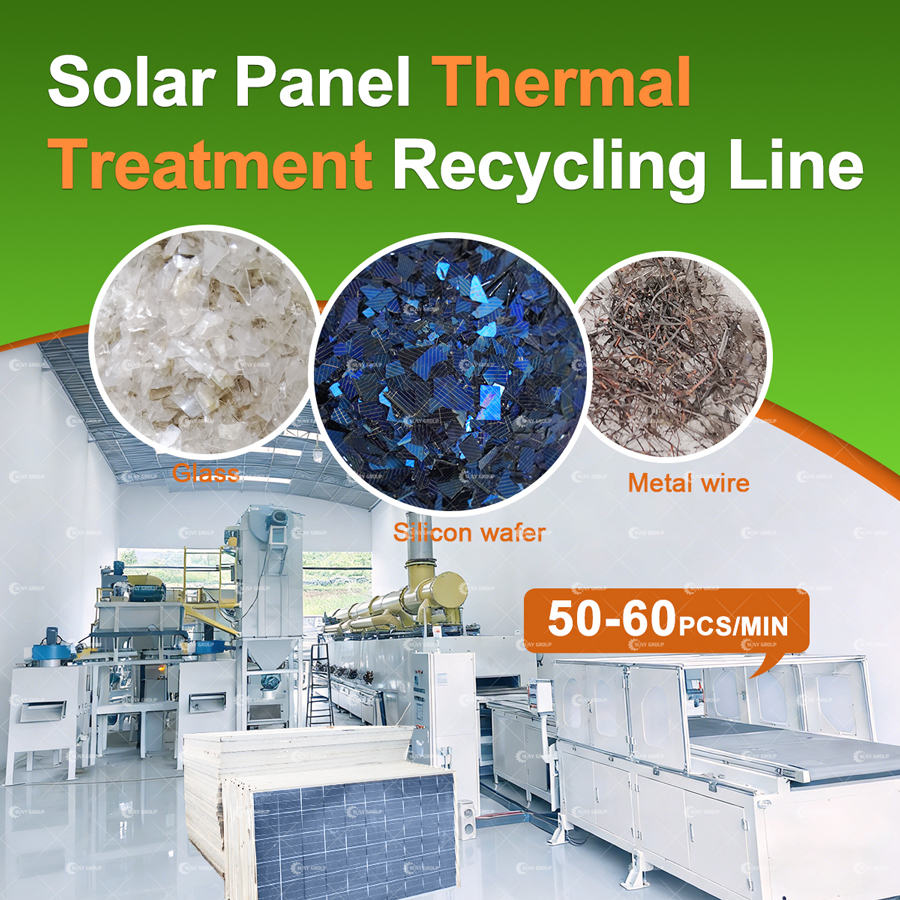
Depending on processing requirements, a complete system may include:
- PV panel inspection and dismantling station.
- Aluminum frame removal machine.
- Junction box and cable removal equipment.
- Thermal treatment furnace or thermal delamination system.
- Glass separation equipment.
- Crusher or granulator.
- Vibrating screen and material classification equipment.
- Magnetic and non-ferrous metal separators.
- Dust collection and exhaust gas treatment systems.
For panels with different structures, including glass-backsheet and double-glass modules, the process and equipment configuration should be selected according to the incoming materials.
5. Final Products and Their Applications
A PV Panel Thermal Recycling Line can produce several recoverable material streams:
- Glass: Reused in suitable glass-processing applications or other products according to its purity and quality.
- Silicon-rich materials: Sent for further processing, purification, or recovery of silicon-containing resources.
- Aluminum: Remelted for manufacturing new aluminum products.
- Copper: Recycled into electrical cables, wires, and other copper products after appropriate processing.
- Other metals: Recovered through suitable downstream separation and refining methods.
- Polymer residues: Managed through appropriate treatment or energy-recovery routes where permitted.
The value of the final products depends on their purity, contamination levels, and local recycling markets.
6. How to Choose the Right PV Panel Thermal Recycling Line
When selecting a PV Panel Thermal Recycling Line, consider panel compatibility, processing capacity, thermal efficiency, material recovery performance, environmental controls, and operating costs. A reliable supplier should be able to customize the system according to panel types, expected throughput, factory layout, and desired output quality.
Particular attention should be paid to furnace temperature control, exhaust gas treatment, dust collection, and worker safety. Thermal processing must be designed to prevent uncontrolled emissions from decomposing encapsulants and other polymers.
A well-designed PV Panel Thermal Recycling Line helps convert end-of-life solar panels into valuable secondary resources. By integrating controlled thermal treatment with efficient mechanical separation, recycling businesses can improve material recovery, reduce waste, and contribute to a more sustainable photovoltaic industry.
Next: