


Solar Panel Recycling Unit
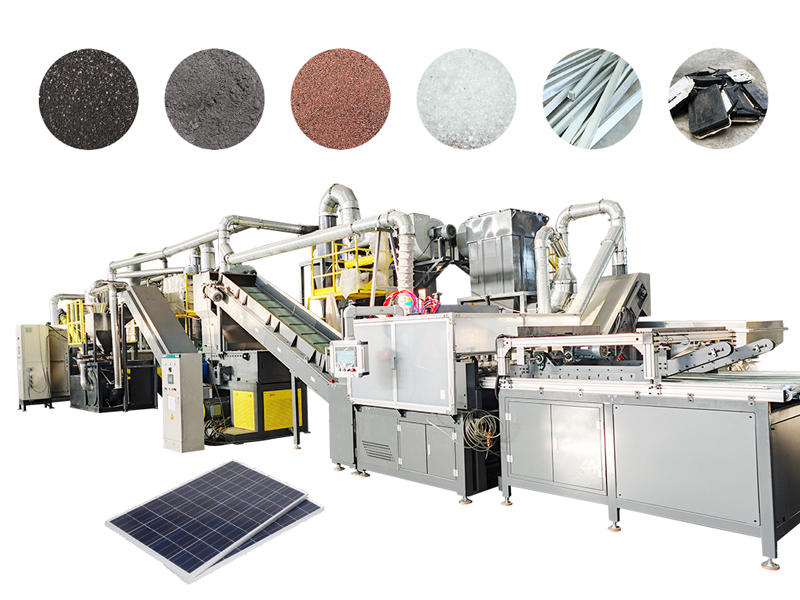
With the rapid growth of solar energy installations worldwide, the number of end-of-life solar panels is increasing significantly. solar panel recycling unit has become an important solution for recovering valuable materials from waste photovoltaic (PV) modules while reducing environmental impact. A complete solar panel recycling unit can separate glass, aluminum, silicon, copper, silver, and other materials through mechanical, thermal, and chemical recycling processes.
What Types of Solar Panels Are Available Today?
Currently, solar panels are mainly divided into several categories according to photovoltaic technology.
1. Crystalline Silicon Solar Panels (c-Si)
Crystalline silicon solar panels are the most widely used type in the global market. They include:
- Monocrystalline Silicon Solar Panels
- Polycrystalline Silicon Solar Panels
These panels usually consist of:
- Aluminum frame
- Tempered glass
- EVA encapsulation layer
- Silicon solar cells
- Copper cables
- Junction box
- Back sheet
Because of their large market share, crystalline silicon panels are the main target material for commercial recycling plants.
2. Thin Film Solar Panels
Thin film solar panels use semiconductor layers deposited on glass, plastic, or metal substrates.
Common types include:
- Cadmium Telluride (CdTe)
- Copper Indium Gallium Selenide (CIGS)
- Amorphous Silicon (a-Si)
Thin film panels contain valuable materials such as cadmium, tellurium, indium, and gallium, but require different recycling technologies compared with silicon panels.
3. Emerging Solar Technologies
New technologies such as perovskite solar cells and tandem solar cells are developing rapidly. However, large-scale commercial recycling systems for these technologies are still being improved.
What Recycling Methods Are Used for Solar Panels?
Different solar panels require different recycling methods. Currently, solar panel recycling mainly includes the following processes:
1. Mechanical Recycling Method
Mechanical recycling is the most common industrial method, especially for crystalline silicon panels.
The process includes:
- Removing the aluminum frame
- Removing the junction box and cables
- Crushing and shredding the solar panels
- Separating glass, metals, and other materials
Advantages:
- Simple operation
- Lower investment cost
- Suitable for large-scale processing
Mechanical recycling is widely used because it can efficiently recover glass, aluminum, and metal materials.
2. Thermal Recycling Method
Thermal recycling uses heating technology to remove EVA layers and separate different components.
Main processes include:
- Heating treatment
- EVA decomposition
- Glass and solar cell separation
Advantages:
- Higher material purity
- Better silicon and metal recovery
However, thermal treatment requires higher energy consumption and emission control systems.
3. Chemical Recycling Method
Chemical recycling uses solvents or chemical solutions to separate valuable materials.
It can recover:
- Silicon
- Silver
- Copper
- Other valuable metals
Advantages:
- High recovery rate
- High material purity
The disadvantage is that chemical processes require careful wastewater and chemical management.
What Is a Solar Panel Recycling Unit?
A solar panel recycling unit is a complete equipment system designed to process waste solar panels and recover valuable materials.
A typical recycling unit includes:
1. Solar Panel Dismantling Machine
The first step is removing:
- Aluminum frames
- Junction boxes
- Cables
This improves the efficiency of the following recycling process.
2. Glass Separation System
Solar panels contain a large amount of glass. The recycling unit separates glass from other layers through mechanical crushing and separation.
Recovered glass can be reused in:
- New glass production
- Construction materials
- Fiberglass manufacturing
3. Solar Panel Shredder
A shredder breaks solar panels into smaller pieces.
Main functions:
- Reduce panel size
- Improve material separation
- Prepare materials for sorting
4. Crushing and Grinding Equipment
After shredding, crushing machines further reduce the material size to release:
- Silicon particles
- Metal particles
- Glass fragments
5. Separation System
A complete recycling unit may include:
- Magnetic separator
- Eddy current separator
- Air separator
- Vibrating screen
These machines separate different materials according to their physical properties.
Complete Solar Panel Recycling Plant Configuration
A full-scale solar panel recycling plant usually includes the following equipment:
1. Feeding System
Used for continuous feeding of waste solar panels into the production line.
2. Frame Removal Machine
Separates aluminum frames from solar panels.
3. Cable and Junction Box Removal Equipment
Removes electrical components before crushing.
4. Primary Shredder
Breaks large solar panels into smaller pieces.
5. Crusher and Grinder
Further processes materials to achieve better separation efficiency.
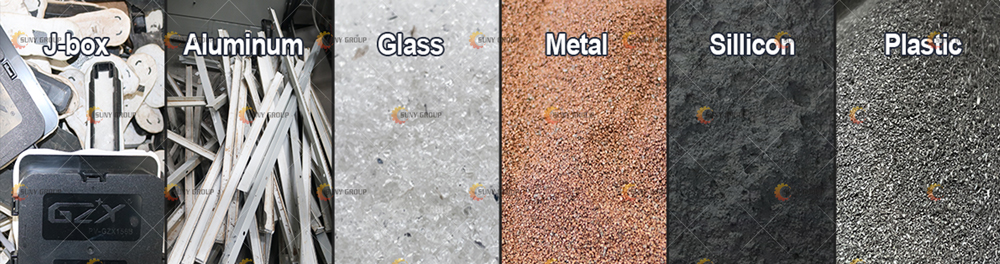
6. Sorting and Separation System
Separates:
- Glass
- Aluminum
- Copper
- Silicon powder
- Plastic materials
7. Dust Collection System
Controls dust generated during crushing and improves environmental protection.
What Materials Can Be Recovered from Solar Panels?
A solar panel recycling unit can recover various valuable materials.
1. Glass
Glass accounts for the largest proportion of solar panel weight. It can be reused in glass production and construction industries.
2. Aluminum
The aluminum frame has high recycling value and can be directly recycled into new aluminum products.
3. Silicon
Recovered silicon can be processed for:
- New solar cells
- Industrial applications
- Battery-related materials
4. Copper
Copper from cables and electrical connections can be recovered and sold as valuable metal.
5. Silver
Solar cells contain small amounts of silver, which has high economic value and can be recovered through advanced processes.
6. Plastic Materials
Materials such as EVA and back sheets can be separated for further treatment.
Who Needs to Buy a Solar Panel Recycling Unit?
A solar panel recycling unit is suitable for:
- Solar panel recycling companies
They process large quantities of discarded PV modules. - Solar power plant operators
They need solutions for damaged or end-of-life panels. - Waste management companies
They expand business into renewable energy waste recycling. - Metal and electronic waste recyclers
They recover valuable metals from solar panels. - Government recycling projects
They establish sustainable waste treatment systems.
Advantages of Solar Panel Recycling Unit
1. High Resource Recovery Rate
The recycling unit can recover valuable materials and reduce waste disposal.
2. Environmental Protection
It prevents solar panels from entering landfills and reduces resource waste.
3. Economic Benefits
Recovered materials such as aluminum, glass, copper, and silver create additional revenue.
4. Flexible Capacity
Recycling plants can be designed according to different requirements, from small-scale units to large industrial production lines.
Solar panel recycling unit is an essential technology for handling increasing photovoltaic waste. Different solar panel types require different recycling methods, including mechanical, thermal, and chemical processes. A complete recycling plant usually includes dismantling machines, shredders, crushers, separators, and dust collection systems. Through efficient recycling, valuable materials such as glass, aluminum, silicon, copper, and silver can be recovered and reused, creating both environmental and economic benefits.
Next: