


PV Solar Panel Recycling Plant
As the global solar industry continues to expand, millions of photovoltaic (PV) panels will reach the end of their service life over the next 20–30 years. This creates a significant opportunity for the recycling industry. A modern PV solar panel recycling plant can recover valuable materials, reduce environmental impact, and support the circular economy.
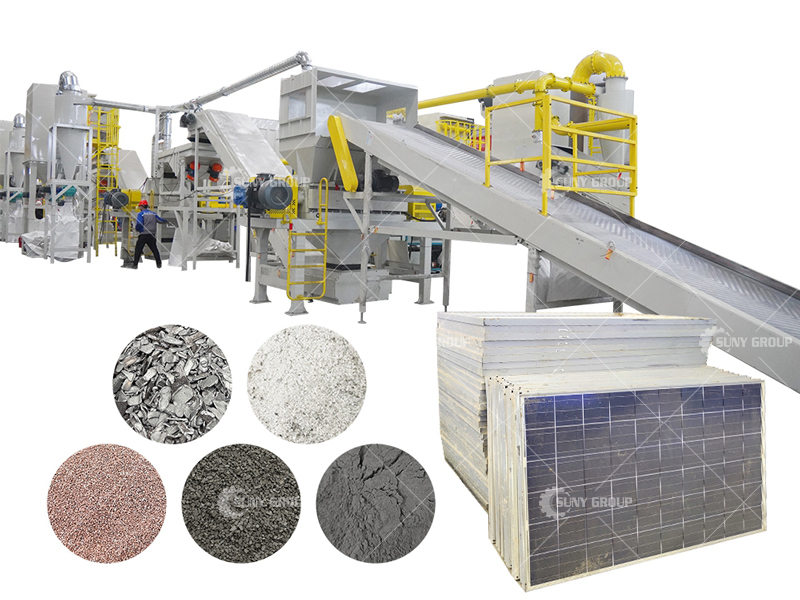
Why Is Solar Panel Recycling Valuable?
Solar panels contain several recyclable materials with substantial economic value. Instead of sending retired panels to landfills, recycling plants can recover high-purity raw materials for reuse in manufacturing.
The main benefits include:
- Reducing electronic waste and landfill usage
- Recovering valuable metals and materials
- Lowering carbon emissions from raw material mining
- Supporting sustainable solar energy development
- Creating new business opportunities in the recycling sector
As governments worldwide introduce stricter environmental regulations, solar panel recycling is becoming an increasingly important industry.
What Materials Can Be Recovered from PV Panels?
A typical crystalline silicon solar panel consists of the following materials:
| Material | Approximate Percentage |
|---|---|
| Glass | 65%–75% |
| Aluminum Frame | 10%–15% |
| Plastics (EVA & Backsheet) | 8%–12% |
| Silicon Cells | 3%–5% |
| Copper | 1%–2% |
| Silver | 0.05%–0.1% |
| Other Metals | <1% |
More than 90% to 95% of a solar panel’s total weight can be recovered through advanced recycling technologies.
Recovered materials include:
- Tempered glass
- Aluminum frames
- Silicon wafers
- Copper ribbons and cables
- Silver powder
- Plastic residues
- Junction box components
These recycled materials can be sold back into manufacturing supply chains, generating significant revenue.
How to Build an Efficient PV Solar Panel Recycling Plant
A high-efficiency recycling plant requires proper equipment configuration and process design.
1. Pre-Treatment Section
The first stage removes major components such as:
- Aluminum frames
- Junction boxes
- Electrical cables
Automated dismantling systems improve productivity and reduce labor costs.
2. Mechanical Crushing System
The panels are fed into a crushing line that breaks them into smaller particles.
Typical equipment includes:
- Shredders
- Hammer crushers
- Fine crushers
- Dust collection systems
This process liberates different materials for subsequent separation.
3. Thermal or Pyrolysis Treatment
EVA encapsulant layers strongly bind solar cells and glass.
Thermal treatment can:
- Remove EVA films
- Separate glass from silicon cells
- Improve metal recovery rates
Pyrolysis technology is especially effective for processing large volumes of waste PV modules.
4. Material Separation System
Advanced separation technologies include:
- Magnetic separation
- Airflow separation
- Vibration screening
- Electrostatic separation
- Eddy current separation
These systems maximize the purity of recovered materials.
5. Precious Metal Recovery
For higher-value recycling operations, additional refining systems can recover:
- Silver
- Copper
- Silicon powder
This stage significantly increases plant profitability.
Recycling Performance and Final Material Quality
A modern PV solar panel recycling plant can achieve excellent recovery efficiency.
Typical recovery rates include:
- Glass recovery: 95%+
- Aluminum recovery: 98%+
- Copper recovery: 95%+
- Silver recovery: 90%+
- Silicon recovery: 85%–95%
The final recovered materials are clean and suitable for reuse in:
- Solar panel manufacturing
- Glass production
- Aluminum smelting
- Copper refining
- Electronics manufacturing
High-quality recycling equipment ensures stable operation, low energy consumption, and consistent material purity.
A professional PV solar panel recycling plant is essential for managing the rapidly growing volume of end-of-life photovoltaic modules. By recovering up to 95% of panel materials, recycling facilities can generate significant economic returns while supporting environmental sustainability. Investing in advanced crushing, separation, and precious metal recovery technologies allows operators to maximize recovery efficiency, material purity, and long-term profitability in the expanding solar recycling market.