


Pyrolysis Line in Solar Panel Recycling
As the global photovoltaic (PV) industry expands rapidly, millions of solar panels will reach the end of their service life in the coming decades. This creates a growing demand for efficient recycling technologies. One of the most advanced solutions is the pyrolysis line in solar panel recycling, which uses high-temperature thermal decomposition to separate valuable materials from waste PV modules.
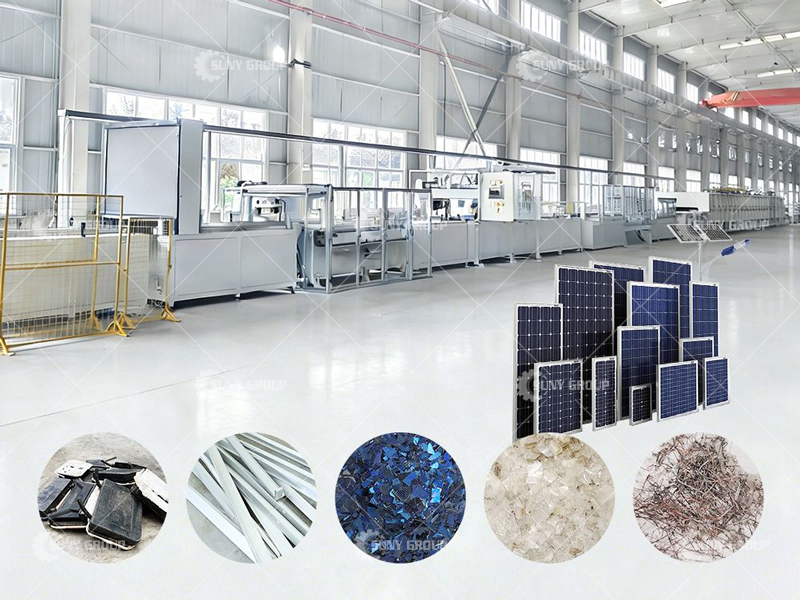
What Is a Pyrolysis Line in Solar Panel Recycling?
A pyrolysis line is a recycling system that heats solar panels in an oxygen-free or low-oxygen environment. During this process, organic materials such as EVA (ethylene-vinyl acetate) film, backsheet layers, and adhesives are thermally decomposed into gas, oil, and carbon residue, while inorganic materials remain intact for further separation.
Unlike traditional mechanical recycling, pyrolysis can effectively remove laminated materials that are difficult to separate manually. This makes it a key technology for modern PV solar panel recycling plants.
Advantages of Pyrolysis in Solar Panel Recycling
Using a pyrolysis line in solar panel recycling offers several important benefits:
1. Efficient Separation of Laminated Layers
Solar panels are made of tightly bonded layers of glass, EVA, silicon cells, and backsheet materials. Pyrolysis breaks down the EVA layer, allowing easy separation of glass and silicon cells without excessive damage.
2. Higher Material Recovery Rate
The process improves recovery of valuable materials such as:
-
Tempered glass
-
Silicon wafers
-
Silver and copper
-
Aluminum frames
Recovery rates can exceed 90% for glass and aluminum when combined with downstream separation equipment.
3. Environmentally Friendly Treatment
Pyrolysis reduces landfill waste and minimizes harmful emissions compared with uncontrolled burning. Modern systems are equipped with gas purification and exhaust treatment units to meet environmental standards.
4. Energy Recovery
The pyrolysis gas generated during heating can be reused as fuel for the system, reducing overall energy consumption and operating costs.
How to Configure a Pyrolysis Line for Solar Panel Recycling
A complete solar panel pyrolysis recycling line typically includes the following equipment:
1. Feeding and Pre-Treatment System
-
Manual or automatic panel loading
-
Removal of aluminum frames and junction boxes
-
Panel crushing or sizing (optional)
2. Pyrolysis Furnace / Reactor
This is the core equipment. Panels are heated to 450–600°C in an oxygen-limited environment. The EVA and backsheet materials decompose into combustible gas and oil vapors.
3. Gas Condensation and Collection System
-
Condensers cool the pyrolysis vapors into pyrolysis oil.
-
Non-condensable gases are collected and reused as fuel.
4. Exhaust Gas Purification System
Includes dust collectors, scrubbers, and activated carbon filters to ensure clean emissions.
5. Material Separation System
After pyrolysis, the remaining solids are processed through:
-
Glass separation equipment
-
Magnetic separators
-
Eddy current separators
-
Silicon and metal recovery systems
A well-designed pyrolysis line should be customized according to plant capacity, panel type, and local environmental regulations.
What Types of Solar Panels Are Suitable for Pyrolysis?
Pyrolysis technology is suitable for most mainstream photovoltaic modules, including:
-
Crystalline Silicon Solar Panels
The most common type, including monocrystalline and polycrystalline modules. Pyrolysis is highly effective for removing EVA encapsulation from these panels.
-
Thin-Film Solar Panels
Some thin-film modules such as CdTe and CIGS panels can also be treated, but they may require additional handling for hazardous materials like cadmium.
-
Damaged or Delaminated Panels
Pyrolysis is ideal for broken, aged, or delaminated panels that are difficult to recycle mechanically.
However, panels containing hazardous substances should be processed with specialized environmental protection measures and compliant waste management systems.
What Materials Are Recovered After Pyrolysis?
After thermal treatment and separation, the following materials can be recovered:
|
Recovered Material |
Main Use |
|---|---|
| Glass |
Reused in glass manufacturing or construction materials |
| Aluminum |
Remelted for industrial aluminum products |
| Silicon |
Refined for reuse in electronics or solar industries |
| Silver |
Recovered as a high-value precious metal |
| Copper |
Recycled into electrical and industrial products |
| Pyrolysis Oil |
Can be used as industrial fuel after treatment |
| Pyrolysis Gas |
Reused as heating fuel for the pyrolysis furnace |
| Carbon Residue |
Can be further processed or used as industrial carbon material |
These recovered materials create strong economic value and help build a circular economy for solar energy waste.
Why Pyrolysis Is the Future of PV Panel Recycling
With increasing volumes of end-of-life solar panels, recycling technologies must be both efficient and sustainable. The pyrolysis line in solar panel recycling offers a practical solution by combining:
-
High recovery efficiency
-
Low environmental impact
-
Energy recycling capability
-
Compatibility with multiple PV module types
-
Scalable industrial operation
For investors and recycling companies, establishing a solar panel pyrolysis recycling plant can become a profitable and environmentally responsible business opportunity.
Pyrolysis line in solar panel recycling is an advanced thermal treatment system that efficiently separates and recovers valuable materials from end-of-life photovoltaic modules. It is especially effective for crystalline silicon panels and damaged PV modules. By recovering glass, silicon, aluminum, silver, copper, pyrolysis oil, and gas, this technology supports sustainable waste management and the circular economy of the solar industry.
As the number of retired solar panels continues to grow worldwide, pyrolysis-based recycling lines will play an increasingly important role in building a greener and more resource-efficient future.