


PV Panel Recycling Solutions
With the rapid development of pv energy, the number of end-of-life photovoltaic (PV) panels is increasing. Choosing suitable pv panel recycling solutions helps businesses recover valuable materials, reduce waste, and improve recycling profitability. Different pv panel technologies have different material compositions, so selecting the right recycling process is essential.
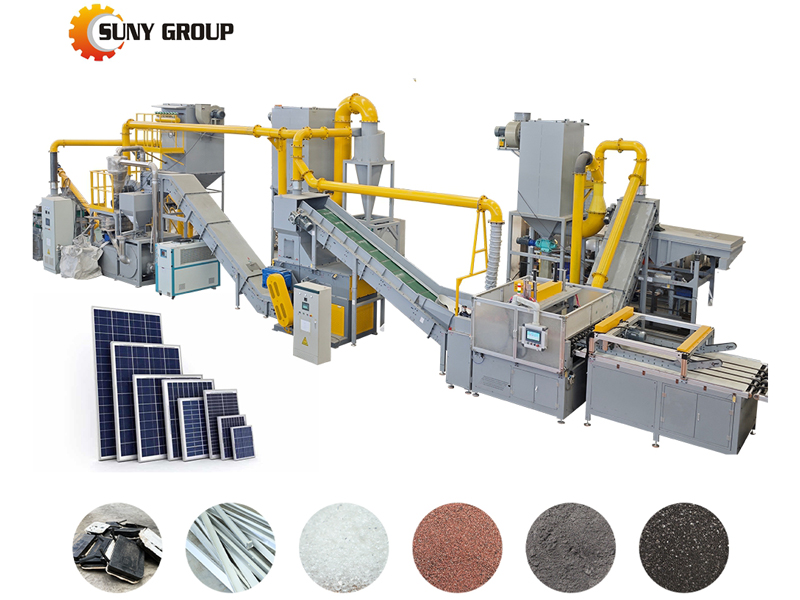
1. Main Types of Pv Panels
Currently, pv panels on the market can be divided into three main categories:
Monocrystalline pv Panels: Made from single-crystal silicon, widely used in residential and commercial pv power systems.
Polycrystalline pv Panels: Manufactured from multiple silicon crystals and commonly found in older photovoltaic installations.
Thin-Film Pv Panels: Include Cadmium Telluride (CdTe), Copper Indium Gallium Selenide (CIGS), and Amorphous Silicon (a-Si) panels.
Crystalline silicon panels account for the majority of the global PV market, while thin-film panels require more specialized recycling technologies.
2. What Materials Can Be Recovered?
A typical crystalline silicon pv panel contains several recyclable materials:
Glass: The largest component, which can be reused in glass manufacturing or other applications.
Aluminum: Mainly from the frame, suitable for secondary aluminum production.
Silicon: Recovered from pv cells for further processing and potential reuse.
Copper and Silver: Found in cables, busbars, and cell metallization, offering additional economic value.
Plastic Materials: EVA encapsulant and backsheets can be processed through suitable separation and treatment methods.
Thin-film panels may also contain valuable materials such as cadmium, tellurium, indium, and gallium, requiring technology-specific recovery processes.
3. Popular pv Panel Recycling Solutions
Different recycling technologies offer different advantages:
1. Mechanical Recycling Solution
This process uses frame removal machines, glass separators, shredders, crushers, magnetic separators, and screening equipment. It is suitable for large-scale crystalline silicon panel recycling, offering relatively low operating complexity, continuous processing, and efficient recovery of bulk materials.
2. Thermal Recycling Solution
Thermal treatment uses controlled heating to break down EVA and other bonding materials, making it easier to separate glass, silicon cells, and metals. Its main advantages are effective delamination and improved recovery of valuable cell materials. However, energy consumption and exhaust gas treatment must be considered.
3. Chemical Recycling Solution
Chemical processes use specialized solvents or reagents to remove encapsulants and recover high-value materials such as silicon, silver, and semiconductor metals. This method offers selective separation and potentially higher material purity but requires chemical management and wastewater treatment.
4. Integrated Recycling Solution
Combining mechanical, thermal, and chemical technologies provides a more comprehensive recovery process. It is suitable for recycling businesses targeting multiple material streams and higher-value products.
4. How to Choose the Right pv Panel Recycling Solution?
Before purchasing pv panel recycling equipment, customers should consider:
Panel Types: Confirm whether the raw materials are monocrystalline, polycrystalline, bifacial, or thin-film panels.
Processing Capacity: Select equipment according to daily or hourly recycling requirements.
Recovery Targets: Determine whether the priority is glass, aluminum, silicon, silver, or comprehensive material recovery.
Investment Budget: Compare equipment costs, energy consumption, labor, and maintenance expenses.
Environmental Requirements: Consider dust collection, exhaust treatment, and wastewater management.
A suitable pv panel recycling solution should match the raw materials, production capacity, recovery targets, and investment budget. A customized recycling plant can help businesses maximize resource recovery, improve operational efficiency, and build a profitable photovoltaic recycling business.