


Double-Side Solar Panel Recycling System
As the solar photovoltaic industry continues to develop, double-side solar panels, especially bifacial and dual-glass solar modules, are becoming increasingly popular. This trend is also creating growing demand for the double-side solar panel recycling system, which is designed to efficiently recover valuable materials from end-of-life bifacial and dual-glass PV modules. Unlike traditional single-sided modules, bifacial panels can generate electricity from both the front and rear sides by capturing direct, reflected, and diffuse sunlight. Dual-glass construction also provides better resistance to moisture, corrosion, UV exposure, and mechanical stress. As more bifacial solar panels are installed worldwide, efficient recycling technologies are becoming increasingly important for recovering glass, aluminum, copper, silicon, silver, and other valuable materials while supporting a more sustainable solar industry.
1. Why Are Double-Side Solar Panels Increasingly Popular?
The growing adoption of double-side solar panels is mainly driven by their higher energy yield and long-term durability.
The key advantages include:
- Higher power generation: Bifacial modules can generate electricity from both sides.
- Better durability: Dual-glass structures provide strong protection against environmental conditions.
- Longer service life: Glass-glass construction can reduce degradation associated with conventional backsheets.
- Better suitability for utility-scale projects: They are particularly attractive for large ground-mounted solar farms.
- Reduced maintenance requirements: Stronger encapsulation and protection can improve long-term reliability.
These advantages have encouraged the use of bifacial modules in large-scale solar installations, making double-side solar panel recycling systems increasingly important as these modules eventually reach the end of their service life.
2. What Is a Double-Side Solar Panel Recycling System?
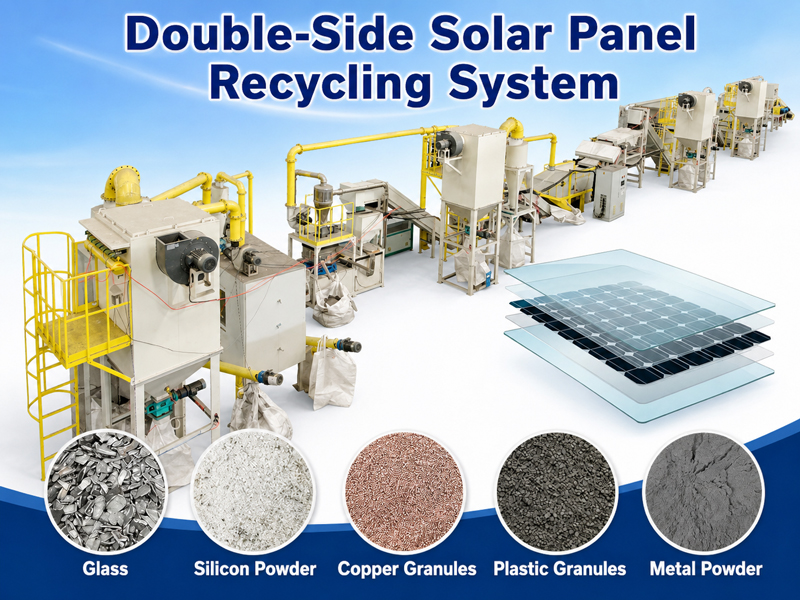
A double-side solar panel recycling system is a specialized recycling line designed to process end-of-life bifacial or dual-glass photovoltaic panels and recover valuable materials.
Compared with conventional PV panels, double-glass modules contain an additional glass layer. This makes the panels more durable during operation but can also make dismantling and material separation more challenging.
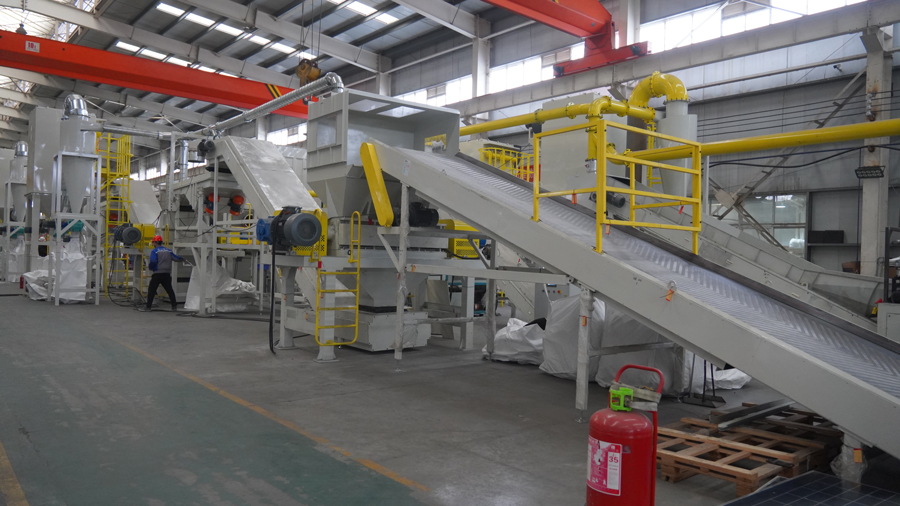
A complete recycling system may include:
- Feeding and conveying system
- Aluminum frame removal machine
- Junction box and cable removal equipment
- Glass separation equipment
- Crushing and shredding machines
- Screening equipment
- Air separation system
- Magnetic separation system
- Eddy current or electrostatic separation equipment
- Dust collection system
- Silicon and metal recovery equipment
The exact configuration should be selected according to the module structure, glass thickness, adhesive materials, capacity, and required recovery purity.
3. How Does Double-Side Solar Panel Recycling Work?
A typical double-side solar panel recycling process can be organized into several stages:
Waste PV Panels → Frame Removal → Junction Box Removal → Glass Separation → Crushing → Screening → Material Separation → Valuable Material Recovery
First, the aluminum frame and junction box are removed. The dual-glass panel is then processed through mechanical, thermal, or other delamination technologies to separate the glass and encapsulated cell layers. The remaining material can be crushed and classified for further separation. The U.S. EPA identifies frame and junction-box removal, glass/cell separation, and subsequent recovery of silicon and specialty metals as major stages of PV recycling.
For advanced systems, additional processes can be used to improve the recovery and purity of silicon, silver, copper, and other valuable materials. Recent research also explores laser-based separation technologies specifically for end-of-life bifacial glass modules.
4. What Materials Can Be Recovered?
The main value of a double-side solar panel recycling system comes from recovering large quantities of glass together with metals and semiconductor materials.
Main Recovered Materials
1. Glass:
Glass is normally the largest component by weight. Solar panels contain substantial quantities of recyclable glass, making glass recovery one of the most important parts of the recycling process.
2. Aluminum:
Aluminum frames can be separated relatively easily and sold directly into aluminum recycling streams.
3. Copper:
Copper is present in ribbons, cables, and electrical connections and can be recovered as a valuable non-ferrous metal.
4. Silicon:
Silicon from photovoltaic cells has important potential for further processing and reuse.
5. Silver:
Although the quantity of silver is relatively small, its high value makes silver recovery economically significant.
6. Tin and other metals:
Tin, lead and other specialty materials may occur in solder and electronic components. Their recovery depends on the panel technology and recycling process.
5. Advantages of a Double-Side Solar Panel Recycling System
A professional double-side solar panel recycling system offers several important advantages:
- High material recovery potential
- Recovery of both glass and valuable metals
- Reduced solar waste sent to landfill
- Lower demand for virgin raw materials
- Potential revenue from recovered glass, aluminum, copper, silicon and silver
- Suitable for large-scale PV recycling plants
- Can be integrated with automated feeding, conveying and sorting systems
- Supports circular-economy development
Recent research indicates that mechanical recycling remains the dominant commercial approach for crystalline-silicon PV modules, while combined mechanical, thermal, and chemical technologies can achieve higher recovery rates and purities for silicon, silver, and other valuable materials.
6. How to Choose a Double-Side Solar Panel Recycling System Manufacturer?
When selecting a double-side solar panel recycling system manufacturer, buyers should evaluate:
- Processing capacity – tons per hour or panels per day.
- Panel compatibility – bifacial, dual-glass, framed or frameless modules.
- Glass separation technology – especially important for double-glass panels.
- Metal recovery rate and purity.
- Silicon and silver recovery capability.
- Automation level and PLC control system.
- Dust collection and environmental protection.
- Wear-resistant components and maintenance requirements.
- Complete plant engineering capability.
- Installation, commissioning and after-sales service.
A reliable manufacturer should ideally conduct material testing before designing the recycling line, because different bifacial and dual-glass modules can have different glass thicknesses, encapsulation materials, cell technologies, and metal compositions.
The increasing popularity of bifacial and dual-glass photovoltaic modules is creating a growing demand for specialized Double-Side Solar Panel Recycling Systems. Although double-glass panels are more challenging to dismantle than conventional modules, they contain significant quantities of recyclable glass, aluminum, copper, silicon, silver and other materials. A properly designed recycling plant can combine frame removal, glass separation, crushing, screening, and advanced sorting technologies to produce valuable secondary raw materials.
For investors planning a PV recycling plant, the most important factors are panel type, processing capacity, recovery rate, output purity, equipment configuration, environmental protection, and manufacturer experience.