


Line Specialized in Recycling Photovoltaic Panels
The growing installation of solar photovoltaic (PV) systems has created an increasing volume of end-of-life solar panels. A line specialized in recycling photovoltaic panels provides an efficient solution for recovering valuable materials from discarded PV modules. A modern solar panel recycling line can separate glass, aluminum, copper, silicon, plastics, and other components, helping recycling companies reduce waste while creating additional material value.
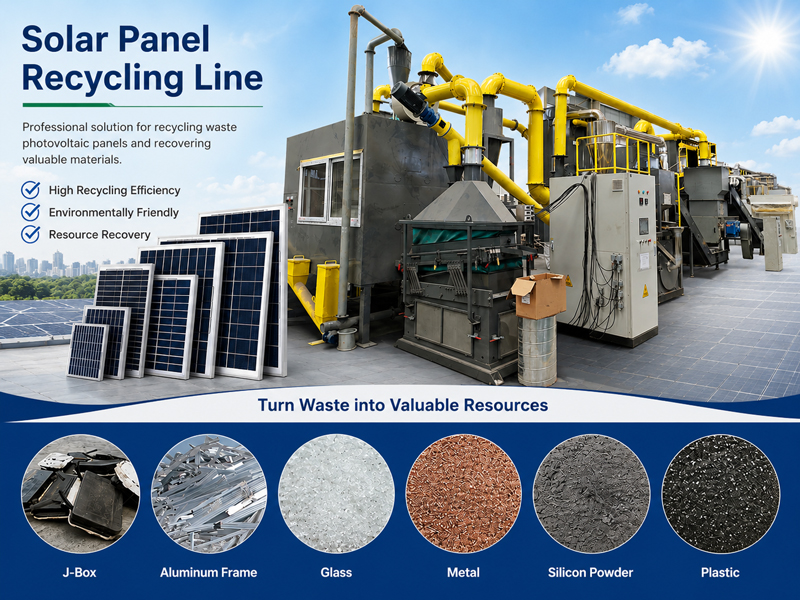
1. What Is a Line Specialized in Recycling Photovoltaic Panels?
A line specialized in recycling photovoltaic panels is a complete processing system designed specifically for the dismantling, crushing, separation, and recovery of waste solar panels. Unlike general waste recycling equipment, a PV panel recycling line is configured according to the structure and material composition of photovoltaic modules.
The main objective is to achieve efficient material separation while maintaining a high recovery rate. Depending on the type of panels and required output, the production line may include feeding equipment, panel dismantling machines, glass removal equipment, shredders, crushers, magnetic separators, eddy current separators, and screening systems.
2. Why Is Photovoltaic Panel Recycling Important?
Solar panels contain large amounts of recyclable materials. When old or damaged PV modules are simply discarded, valuable resources may be wasted and disposal costs can increase.
A professional solar panel recycling line can recover major components from waste photovoltaic modules, including:
- Glass: commonly the largest material fraction of a PV panel.
- Aluminum: mainly recovered from the panel frame.
- Copper: found in cables, junction boxes, and electrical connections.
- Silicon: recovered from photovoltaic cells through further processing.
- Plastic materials: including encapsulants and backsheets.
Recycling these materials can reduce the demand for virgin resources and support a more circular solar energy industry.
3. Main Equipment in a PV Panel Recycling Line
The configuration of a photovoltaic panel recycling line depends on the panel type, processing capacity, and required final product size. A typical system may include several stages.
First, the waste panels are fed into the production line. Aluminum frames and junction boxes can be removed before mechanical processing. The remaining panel structure is then crushed or shredded into smaller pieces.
After size reduction, separation equipment is used to divide different materials. Screening equipment controls particle size, while magnetic separation can recover ferrous materials. Other separation technologies can be added to improve the purity of glass, metals, and other fractions.
4. How Does a Photovoltaic Panel Recycling Line Work?
The recycling process generally follows a continuous workflow:
Waste PV Panels → Dismantling → Crushing/Shredding → Screening → Material Separation → Collection
The first stage removes easily detachable components such as aluminum frames and cables. The panels then enter crushing or shredding equipment for controlled size reduction.
After crushing, the material passes through screening and separation systems. Glass can be separated from smaller fractions, while metal separation equipment helps recover aluminum, copper, and other valuable materials. The final configuration should be customized according to the customer’s target products and required recovery performance.
5. Advantages of a Specialized PV Panel Recycling Line
A specialized recycling system offers several advantages compared with manual dismantling or general-purpose waste processing equipment.
- Higher processing efficiency – Continuous equipment can process large quantities of waste PV panels.
- Better material recovery – Multiple separation stages help recover different valuable fractions.
- Reduced labor requirements – Automated feeding and processing reduce manual operations.
- Flexible configuration – Equipment can be selected according to panel type and capacity.
- Improved resource utilization – Recovered glass, aluminum, copper, and other materials can be reused.
- Scalable production – The line can be designed for small, medium, or large recycling projects.
6. Photovoltaic Panel Recycling Line Capacity and Cost
The cost of a line specialized in recycling photovoltaic panels varies according to several factors. Processing capacity is one of the most important considerations. A small recycling operation may require a compact system, while a commercial recycling plant may need a high-capacity automated production line.
Other factors affecting the price include the number of machines, degree of automation, panel dismantling method, separation technology, installation requirements, and final material specifications.
Before purchasing equipment, buyers should evaluate the expected quantity of waste panels, required output capacity, available factory space, labor conditions, and target recovered materials. A customized PV panel recycling line can provide a more practical balance between investment, operating cost, and recycling efficiency.
A line specialized in recycling photovoltaic panels is an important solution for managing the growing volume of end-of-life solar modules. By combining dismantling, crushing, screening, and separation technologies, a complete PV recycling system can recover valuable materials while reducing waste. Choosing the right equipment configuration and processing capacity is essential for building an efficient and commercially viable solar panel recycling plant.