


Solutions for Photovoltaic Panel Recycling
With the rapid growth of solar energy, the number of retired and damaged photovoltaic (PV) panels is increasing. Effective photovoltaic panel recycling is important for reducing waste, recovering valuable resources, and supporting a circular economy. Most crystalline silicon PV panels contain valuable materials such as glass, aluminum, silicon, copper, and small quantities of precious metals. If discarded improperly, damaged panels may occupy significant landfill space and cause potential environmental risks. Recycling can reduce the demand for virgin raw materials while creating additional economic value from end-of-life solar panels.
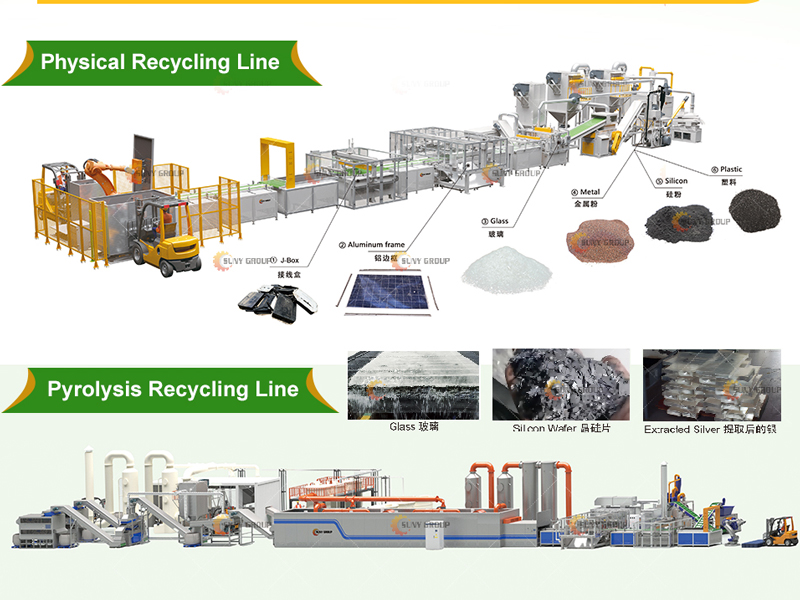
1. Current Photovoltaic Panel Recycling Solutions
PV panels generally consist of several tightly bonded layers, including a glass front sheet, encapsulant, solar cells, backsheet, aluminum frame, junction box, and metal wiring. Therefore, efficient recycling requires separation and recovery of these components.
Common photovoltaic panel recycling solutions include:
- Mechanical or physical recycling
- Thermal treatment or pyrolysis
- Chemical recycling and advanced separation technologies
- Combined physical and thermal recycling systems
Among these solutions, physical recycling and pyrolysis are widely considered practical approaches for separating valuable materials from end-of-life PV modules.
2. Physical Method for Photovoltaic Panel Recycling
The physical method mainly uses mechanical equipment to dismantle, crush, separate, and sort photovoltaic panels without relying on high-temperature treatment. A typical physical PV recycling line may include:
- Aluminum frame remover
- Junction box remover
- Glass separator or crusher
- Shredder or crusher
- Magnetic separator
- Eddy current separator
- Air separator
- Screening equipment
- Conveyors
The process generally starts with removing the aluminum frame and junction box. The remaining panel is then crushed or processed mechanically to separate glass, metals, and other fractions. Screening and separation equipment further improves material purity.
Advantages of the Physical Method
- Lower energy consumption compared with thermal treatment
- Continuous and highly automated operation
- Suitable for large-scale PV recycling
- Relatively simple equipment configuration
- High glass and aluminum recovery potential
- Lower operating temperature and fewer thermal emissions
Disadvantages of the Physical Method
The main challenge is separating the solar cells and silicon from the encapsulant. Mechanical crushing may produce mixed material and can reduce the purity of fine fractions. Therefore, additional sorting or refining equipment may be required when high-purity silicon or metal recovery is the target.
3. Pyrolysis Method for Photovoltaic Panel Recycling
The pyrolysis method uses controlled heating to decompose or remove organic encapsulant materials, such as EVA, that bond the solar cells to the glass and backsheet. During thermal treatment, the polymer material breaks down, allowing the glass, cells, and metal components to be separated more effectively.
A typical process includes:
- Removing the aluminum frame and junction box.
- Feeding the PV modules into a pyrolysis or thermal treatment system.
- Heating the panels under controlled conditions.
- Decomposing the encapsulant.
- Separating the released glass, solar cells, metals, and remaining materials.
- Further refining and sorting the recovered materials.
Advantages of the Pyrolysis Method
- Effective removal of EVA and other organic encapsulants
- Better separation of solar cells from glass
- Suitable for recovering relatively intact cell materials
- Can improve the purity of certain recovered fractions
- Particularly useful when silicon and valuable metals are targeted
Disadvantages of the Pyrolysis Method
Pyrolysis generally requires more energy and more complex thermal equipment than mechanical recycling. The process also requires careful control of temperature, exhaust gas treatment, and thermal safety. Depending on the technology and feedstock, additional purification may be necessary after thermal treatment.
4. Which PV Panels Are Suitable for Each Method?
The appropriate photovoltaic panel recycling solution depends on the panel structure, condition, and desired recovered materials.
Physical recycling is generally suitable for:
- Crystalline silicon PV panels
- Damaged or broken solar panels
- Large volumes of end-of-life panels
- Panels where glass and aluminum recovery are priorities
- Recycling operations requiring high throughput
Pyrolysis is particularly suitable for:
- Crystalline silicon modules with strongly bonded EVA layers
- Panels where improved cell separation is required
- Recycling projects targeting silicon and valuable metals
- Applications where thermal delamination can improve downstream recovery
For commercial recycling plants, a combined physical and thermal process can sometimes provide better overall recovery. For example, aluminum and junction boxes can first be removed mechanically, followed by thermal delamination and subsequent mechanical separation.
5. What Materials Can Be Recovered from PV Panels?
A properly designed PV panel recycling plant can recover several valuable materials, including:
- Glass: the largest material fraction in many crystalline silicon modules, suitable for glass recycling.
- Aluminum: mainly recovered from the frame and mounting components.
- Silicon: recovered from solar cells and potentially reused after purification.
- Copper: found in cables, ribbons, and electrical connections.
- Silver: present in small quantities in solar-cell metallization.
- Other metals: depending on panel design and technology.
- Plastic materials: recovered from backsheets and encapsulants, although their treatment depends on the recycling process.
6. How to Choose the Right Recycling Solution?
There is no single recycling process suitable for every PV recycling project. When selecting a solution, investors should consider:
- PV panel type and structure
- Processing capacity
- Target recovery materials
- Required material purity
- Energy consumption
- Labor and operating costs
- Environmental-control requirements
- Equipment investment
- Future expansion requirements
For high-volume operations where glass and aluminum recovery are the main objectives, a mechanical photovoltaic panel recycling line can provide an efficient solution. When high-quality separation of encapsulant and solar cells is required, pyrolysis can provide an important additional treatment step.
Both physical recycling and pyrolysis have important roles in modern photovoltaic panel recycling. Physical recycling offers high throughput, relatively simple operation, and efficient recovery of glass and aluminum, while pyrolysis provides an effective method for removing encapsulants and improving the separation of solar cells and other valuable materials. The optimal solution depends on the PV panel type, processing capacity, investment budget, and target products. By selecting the appropriate combination of mechanical separation, thermal treatment, and downstream sorting technologies, recycling companies can transform end-of-life solar panels into valuable resources while reducing environmental impacts and supporting the sustainable development of the solar industry.