


Solar Panels Scrap Recycling Plant
As solar energy adoption continues to accelerate globally, the amount of obsolete and damaged photovoltaic (PV) panels is increasing year by year. solar panels scrap recycling plant is designed to efficiently recycle waste solar panels, extract reusable materials, and reduce the burden on landfills. With a typical service life of 25–30 years, millions of tons of PV panels will reach the end of their operational cycle in the coming decades, making solar panel recycling an important and profitable industry.
A professional solar panel recycling plant can separate aluminum frames, glass, copper, silicon, silver, and plastics through mechanical, thermal, and separation technologies, turning waste photovoltaic modules into valuable secondary raw materials.
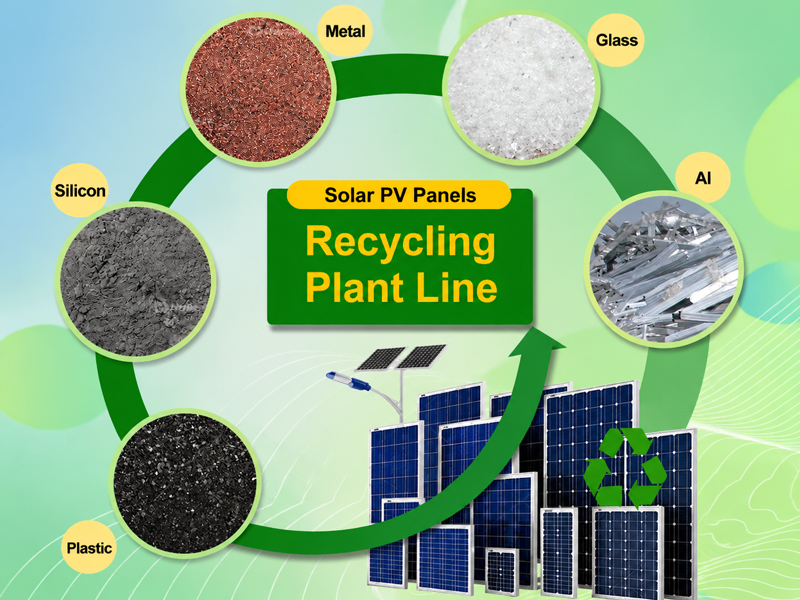
Why Are Waste Solar Panels Increasing?
The main reasons for the rapid increase in solar panel scrap include:
- Rapid Expansion of Solar Energy
Governments and industries around the world are promoting renewable energy development. The increasing number of solar farms and rooftop solar systems means more panels will eventually reach the end of their operating life.
- Aging Solar Installations
Most photovoltaic panels are designed for long-term operation. After 25–30 years, panels may experience reduced efficiency, physical damage, or technical upgrades, creating demand for recycling.
- Damaged and Defective Panels
Solar panels can become waste due to:
- Transportation damage
- Severe weather conditions
- Manufacturing defects
- Fire or mechanical damage
- Solar farm replacement projects
- Environmental Regulations
Many countries are introducing stricter waste management policies, requiring responsible recycling instead of landfill disposal.
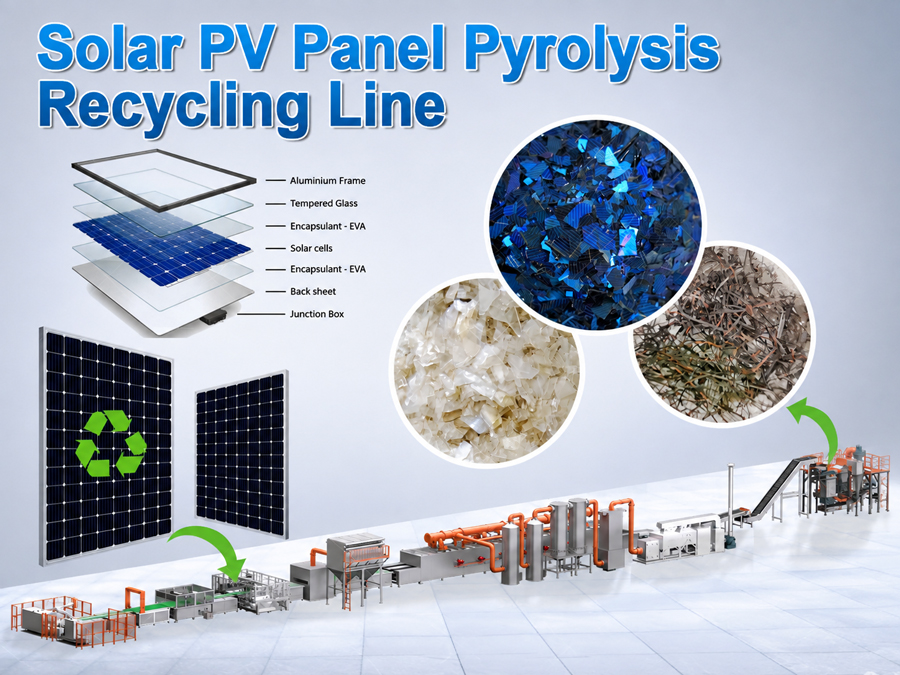
Valuable Materials in Scrap Solar Panels
A solar panel is made of multiple layers, including glass, aluminum frame, silicon cells, copper wires, EVA film, and backsheet materials. These components have different recycling values.
1. Glass
Glass is the largest component of a solar panel and accounts for most of its weight. Recycled solar glass can be used for:
- New glass products
- Construction materials
- Glass fiber production
- Building materials
2. Aluminum Frame
The aluminum frame is easy to remove and has high recycling value. Recycled aluminum can be used for:
- New solar panel frames
- Automotive parts
- Construction products
- Aluminum manufacturing
3. Silicon
Silicon solar cells are one of the most important materials in photovoltaic panels. Recovered silicon can be reused for:
- New solar cells
- Silicon materials
- Semiconductor industries
4. Copper
Copper exists mainly in cables, junction boxes, and electrical connections. It can be recycled for:
- Electrical wires
- Motors
- Transformers
- Copper products
5. Silver and Other Metals
Solar cells contain small amounts of valuable metals such as silver, tin, and lead. Although the quantity is low, these materials have high economic value.
Current Solar Panel Recycling Solutions: Advantages and Disadvantages
1. Mechanical Recycling Method
Mechanical recycling uses dismantling, crushing, shredding, grinding, and sorting equipment.
Process:
- Remove aluminum frame
- Remove junction box
- Crush solar panels
- Separate glass, metals, silicon, and plastics
Advantages:
- Simple operation
- Low investment cost
- Suitable for large-scale production
- Easy maintenance
Disadvantages:
- Material purity may be lower
- Silicon and silver recovery efficiency can be limited
2. Thermal Recycling Method
Thermal recycling uses heating or pyrolysis technology to remove EVA adhesive layers and separate valuable materials.
Advantages:
- Better separation efficiency
- Higher silicon and metal recovery rate
Disadvantages:
- Higher energy consumption
- Requires emission control equipment
3. Chemical Recycling Method
Chemical processes use solvents or chemical treatments to dissolve encapsulation materials.
Advantages:
- High material purity
- Good recovery of silver and silicon
Disadvantages:
- Higher operating costs
- Chemical waste treatment is required
Currently, many industrial solutions combine mechanical processing with thermal or chemical technologies to improve recovery efficiency.
How to Build a Solar Panels Scrap Recycling Plant?
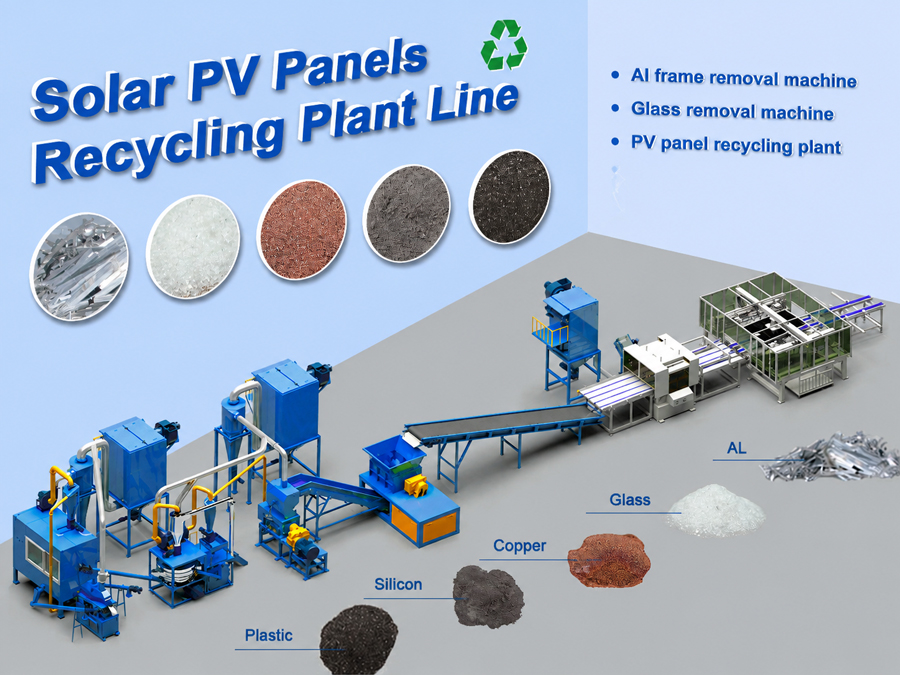
A complete Solar Panels Scrap Recycling Plant usually includes the following systems:
1. Solar Panel Dismantling System
Main equipment:
- Aluminum frame removal machine
- Junction box remover
- Cable cutting equipment
Function:
Remove easily recyclable components before further processing.
2. Crushing and Grinding System
Main equipment:
- Shredder
- Crusher
- Grinder
Function:
Break solar panels into smaller particles and release glass, silicon, and metal materials.
3. Separation System
Main equipment:
- Vibrating screen
- Air separator
- Magnetic separator
- Electrostatic separator
Function:
Separate different materials according to size, density, and conductivity.
4. Dust Collection System
A dust removal system is necessary to control particles generated during crushing and ensure environmentally friendly production.
Final Recovered Materials and Applications
After processing in a Solar Panels Scrap Recycling Plant, the final products include:
Recovered Glass
Applications:
- Construction materials
- Glass manufacturing
- New photovoltaic glass
Recovered Aluminum
Applications:
- Solar frame production
- Automobile industry
- Metal manufacturing
Recovered Copper
Applications:
- Electrical cables
- Electronic components
- Industrial equipment
Recovered Silicon Powder
Applications:
- Solar material production
- Silicon processing industries
Recovered Plastic
Applications:
- Plastic products
- Composite materials
- Packaging materials
Advantages of Solar Panels Scrap Recycling Plant
- High-value material recovery
- Reduces landfill waste
- Supports circular economy development
- Creates additional business opportunities
- Reduces dependence on raw material mining
- Environmentally friendly recycling solution
Solar Panels Scrap Recycling Plant is an important investment for future renewable energy waste management. With the continuous growth of solar installations, recycling waste photovoltaic panels can recover valuable materials such as glass, aluminum, silicon, copper, and silver. By combining dismantling, crushing, grinding, and separation technologies, modern recycling plants can efficiently transform discarded solar panels into reusable resources for the glass, metal, construction, and solar industries.