


solar panel recycling plant for renewable energy
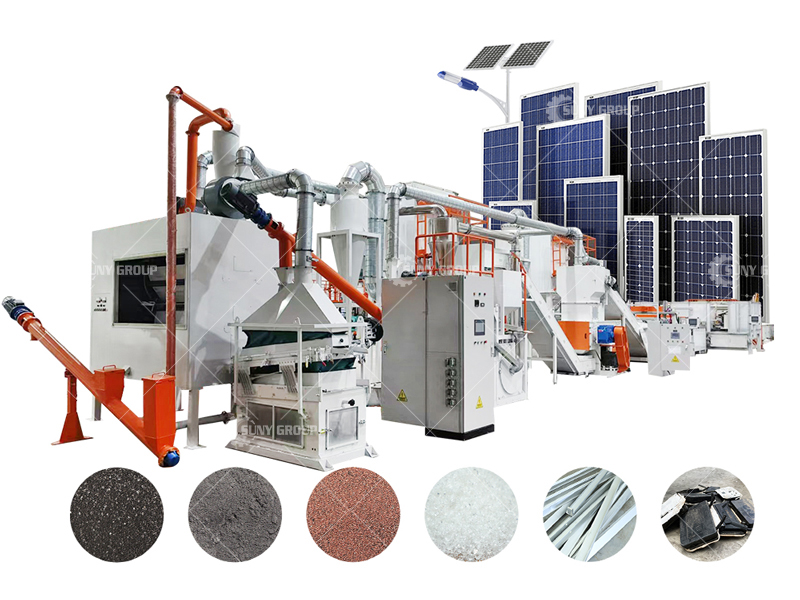
As the global demand for clean energy grows, solar panel installations are increasing rapidly. However, end-of-life photovoltaic (PV) panels are becoming a major concern. A solar panel recycling plant for renewable energy offers a sustainable solution by recovering valuable materials and reducing environmental impact. This article explains whether solar panels can be reused, how a recycling line is configured, what machines are required, and the industries that benefit from recovered resources.
1. Can Solar Panels Be Recycled and Reused?
Yes, solar panels can be effectively recycled. Most PV panels contain valuable materials such as:
- Glass (about 70–75%)
- Aluminum frames
- Silicon cells
- Copper wiring
- Silver and trace metals
Through advanced recycling technologies, up to 90–95% of materials can be recovered and reused. This significantly reduces landfill waste and supports a circular economy in the renewable energy sector.
2. Solar Panel Recycling Line Configuration
A typical solar panel recycling line is designed to process panels efficiently while maximizing material recovery. The configuration generally includes:
- Pre-treatment Section
- Manual or automated removal of aluminum frames and junction boxes
- Crushing and Shredding System
- Breaks panels into smaller pieces for easier separation
- Thermal Treatment Unit
- Removes EVA (ethylene vinyl acetate) encapsulation using controlled heating
- Separation System
- Separates glass, metals, and silicon using air flow, vibration, and density differences
- Refining and Collection
- Further purification of metals like copper and silver
3. Key Machines in a Solar Panel Recycling Plant
A complete recycling facility includes several specialized machines:
- Frame Removal Machine
Automatically separates aluminum frames from panels - Glass Delamination Machine
Removes glass layers without damaging valuable materials - Double Shaft Shredder
Reduces panel size for downstream processing - Hammer Crusher
Further crushes materials into fine particles - Thermal Furnace
Burns off EVA layers to release silicon cells - Air Separator & Vibrating Screen
Sorts materials based on weight and size - Electrostatic Separator
Recovers fine metal particles like copper and silver - Dust Collection System
Ensures environmental compliance and clean operation
4. Recyclable Materials and Their Value
After processing, a solar panel recycling plant can recover:
- Glass: Reused in new panels or construction materials
- Aluminum: Melted and reused in manufacturing
- Silicon: Refined for reuse in solar cells or electronics
- Copper: Used in electrical wiring and components
- Silver: High-value metal reused in electronics and energy sectors
These materials retain significant economic value, making recycling both environmentally and financially beneficial.
5. Applications of Recovered Materials
Recycled materials from solar panels are widely used across industries:
- Renewable Energy Industry
- Reused silicon and glass for new solar panels
- Construction Industry
- Glass and aluminum used in building materials
- Electronics Industry
- Recovered metals like copper and silver for circuit boards
- Manufacturing Sector
- Raw materials for various industrial products
6. Advantages of Solar Panel Recycling Plants
- Reduces environmental pollution
- Conserves natural resources
- Supports sustainable energy goals
- Generates economic returns from waste
- Meets global recycling regulations
Solar panel recycling plant plays a crucial role in closing the loop of the solar industry. By efficiently recovering valuable materials and reintegrating them into production cycles, these plants contribute to both environmental protection and economic sustainability. As solar adoption continues to rise, investing in advanced recycling solutions is no longer optional—it is essential for a greener future.