


Solar Panel Recycling Plant 1 Ton Per Hour
With the rapid growth of renewable energy, millions of solar panels will reach the end of their service life in the coming years. Building a solar panel recycling plant 1 ton per hour has become an attractive investment opportunity for companies looking to enter the green recycling industry. A solar panel recycling plant can recover valuable materials such as glass, aluminum, silicon, and metals, reducing waste while creating economic benefits.
Why Is Solar Panel Recycling Valuable?
Solar panels usually have a service life of 25–30 years. After retirement, they should not simply be treated as waste because they contain many recyclable materials.
The main values of solar panel recycling include:
1. Recovery of Valuable Materials
A solar panel mainly consists of:
- Glass: approximately 70–75%
- Aluminum frame: approximately 10%
- Silicon materials
- Copper wires
- Silver and other metals
- EVA plastic film and backsheet materials
Recovering these materials can reduce dependence on natural resources and create additional revenue.
2. Environmental Protection
Improper disposal of solar panels may cause resource waste and increase landfill pressure. Recycling allows valuable materials to return to manufacturing industries and supports a circular economy.
3. Growing Market Demand
As global solar installations continue expanding, the number of retired photovoltaic panels is increasing. Governments and renewable energy companies are paying more attention to solar panel recycling solutions.
How to Build a 1 Ton Per Hour Solar Panel Recycling Plant?
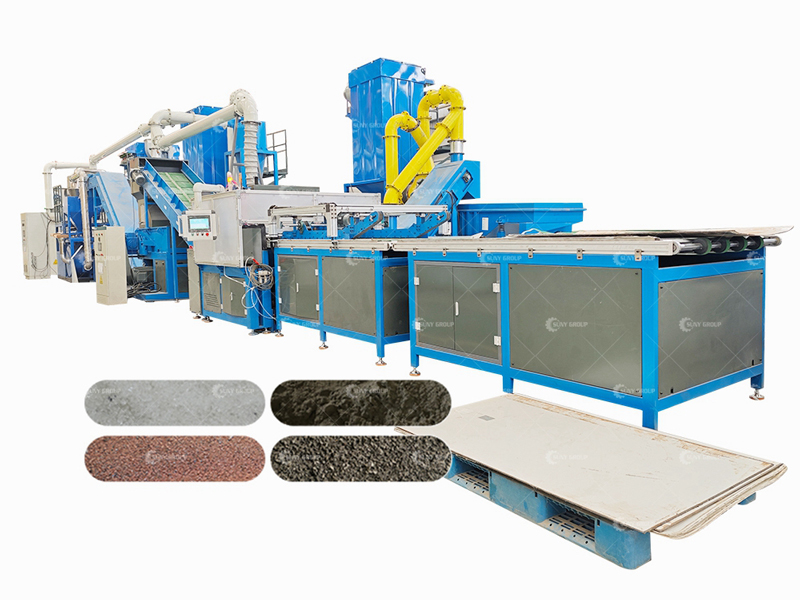
A 1 ton per hour solar panel recycling plant is a medium-scale industrial recycling system designed to process approximately 1 ton of waste solar panels every hour.
The main steps include:
1. Raw Material Feeding System
Waste solar panels are transported to the feeding area. Workers or automatic feeding equipment place panels into the recycling line.
2. Solar Panel Dismantling and Separation
The first stage removes valuable external components:
- Aluminum frames are separated.
- Junction boxes and cables are removed.
- Large metal parts are collected.
3. Crushing System
The remaining solar panels enter a crusher. The crushing process breaks the panels into smaller pieces and releases internal materials.
4. Separation System
Advanced separation equipment separates different materials through multiple technologies:
- Magnetic separation for ferrous metals
- Air separation for lightweight materials
- Screening systems for size classification
- Gravity separation for different material densities
5. Material Collection and Storage
The recovered materials are collected separately for resale or further processing.
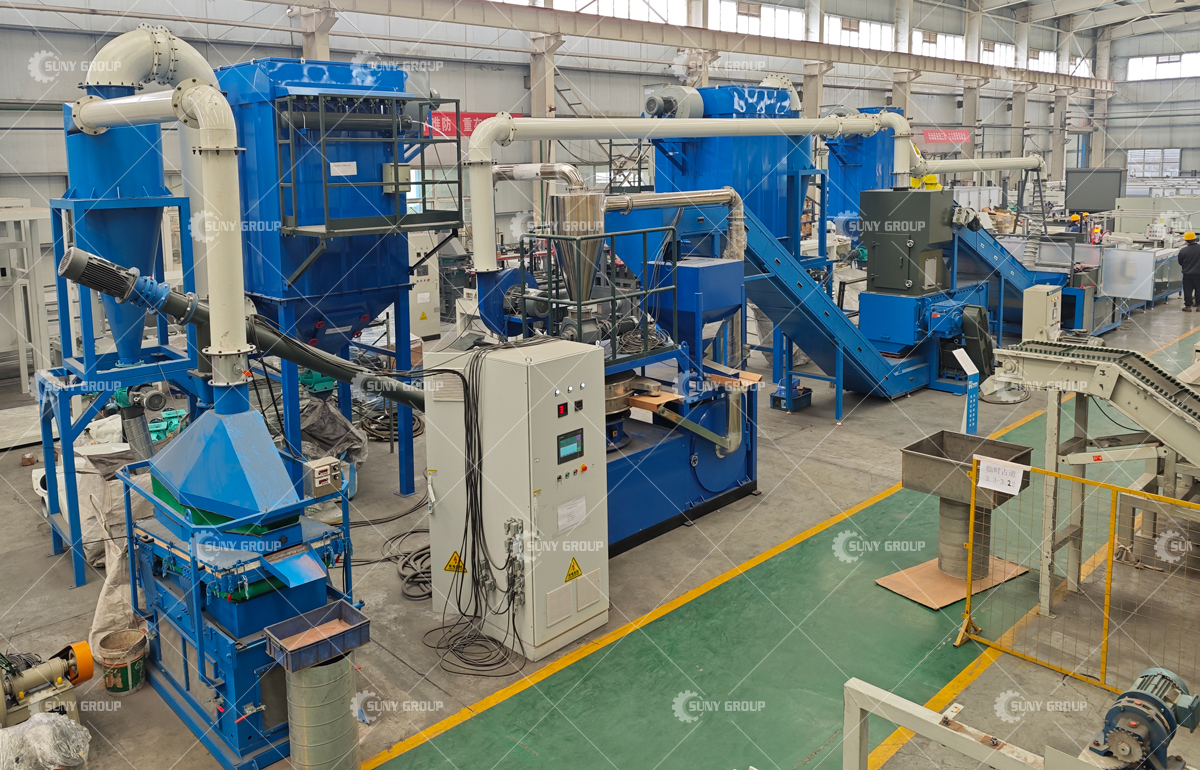
A complete 1 ton per hour solar panel recycling plant usually includes:
- Feeding conveyor
- Dismantling machine
- Crusher
- Shredder
- Magnetic separator
- Air separator
- Vibrating screen
- Dust collection system
- Electrical control system
Solar Panel Recycling Plant 1 Ton Per Hour Cost
The cost of a 1 ton per hour solar panel recycling plant depends on equipment configuration, automation level, manufacturer, and installation requirements.
Generally, the estimated investment range is:
- Basic recycling line: USD 300,000–500,000
- Standard automated recycling plant: USD 500,000–800,000
- Advanced complete recycling system: USD 800,000–1,200,000+
The final cost may vary according to customer requirements and local conditions.
Factors Affecting Solar Panel Recycling Plant Cost
1. Processing Capacity
Higher capacity requires larger crushers, stronger conveyors, and more powerful separation systems, increasing investment costs.
2. Automation Level
Fully automatic plants require fewer workers and provide higher production efficiency but have higher initial costs.
3. Equipment Configuration
Additional equipment such as advanced sorting systems, dust collectors, and purification systems can increase the total project cost.
4. Installation and Infrastructure
Factory construction, electricity supply, transportation systems, and installation services also influence the overall budget.
5. Material Recovery Requirements
Plants designed to achieve higher recovery rates require more advanced technology and equipment.
Recycled Materials From Solar Panels and Their Uses
A solar panel recycling plant can recover several valuable materials:
1. Glass
Recovery rate: About 70–75%
Uses:
- New solar panel production
- Glass manufacturing
- Construction materials
- Glass fiber products
2. Aluminum Frame
Uses:
- New aluminum products
- Automotive parts
- Construction materials
- Industrial applications
Aluminum has high recycling value because it can be reused repeatedly.
3. Silicon
Uses:
- New photovoltaic cells
- Semiconductor industries
- Silicon material production
Recovering silicon reduces the need for raw silicon mining.
4. Copper
Uses:
- Electrical cables
- Electronics manufacturing
- Metal products
Copper has strong market demand due to its excellent conductivity.
5. Silver and Precious Metals
Uses:
- Electronic components
- Solar cell manufacturing
- Industrial applications
Although the quantity is small, silver recovery can significantly improve recycling profitability.
6. Plastic Materials
Uses:
- Fuel production
- Plastic recycling
- Composite materials
Solar panel recycling plant 1 ton per hour provides an effective solution for handling increasing photovoltaic waste while recovering valuable resources. By investing in a suitable recycling system, companies can obtain materials such as glass, aluminum, silicon, copper, and silver for reuse in various industries.
The solar panel recycling plant cost depends on capacity, automation, equipment selection, and recovery requirements. With the continuous growth of solar energy worldwide, solar panel recycling will become an important part of the renewable energy supply chain and offer significant long-term business potential.