


Solar Module Recycling Machines
Solar panels, also called photovoltaic (PV) modules, are widely used in residential, commercial, and industrial renewable energy systems. As large numbers of solar panels reach the end of their service life, solar module recycling machines have become increasingly important in the recycling industry.
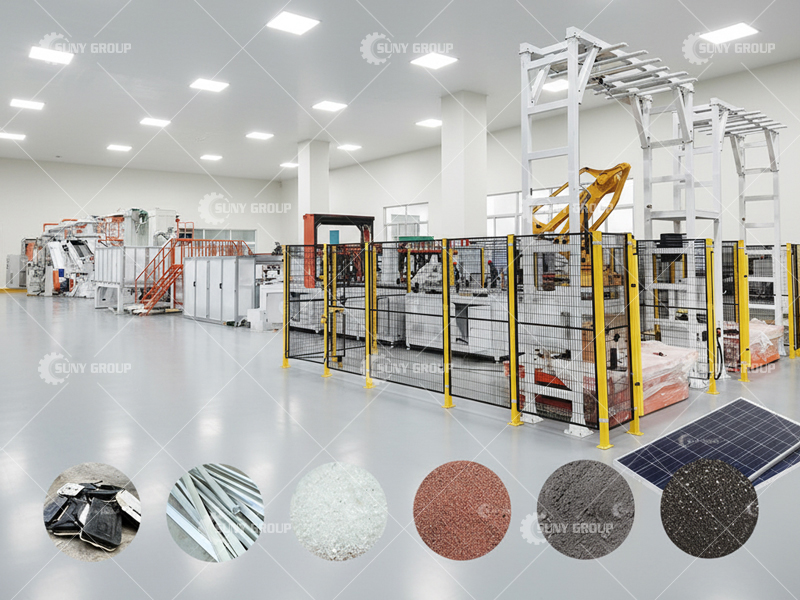
Main Types of Solar Modules
Monocrystalline Solar Panels
- High conversion efficiency
- Long service life
- Widely used in residential systems
Polycrystalline Solar Panels
- Lower manufacturing cost
- Stable performance
- Common in commercial applications
Thin-Film Solar Panels
- Lightweight structure
- Flexible installation
- Used in special industrial projects
Bifacial Solar Modules
- Can generate electricity from both sides
- Higher energy efficiency
- Popular in large solar power stations
Each type of solar module contains valuable recyclable materials such as glass, aluminum, silicon, copper, and silver.
1. Importance and Value of Solar Module Recycling
With the rapid expansion of the solar energy industry, millions of waste solar panels are expected to enter the recycling market in the coming years. Recycling solar modules has both economic and environmental value.
Main Benefits of Solar Panel Recycling
- Reduces electronic waste pollution
- Saves natural mineral resources
- Recovers valuable metals and materials
- Supports circular economy development
- Reduces landfill disposal costs
- Lowers carbon emissions from raw material mining
Valuable Recyclable Materials
Solar panels contain:
- Aluminum frames
- Tempered glass
- Copper wires
- Silicon wafers
- Silver powder
- Plastic materials
Recovered materials can be reused in manufacturing industries, creating significant economic returns.
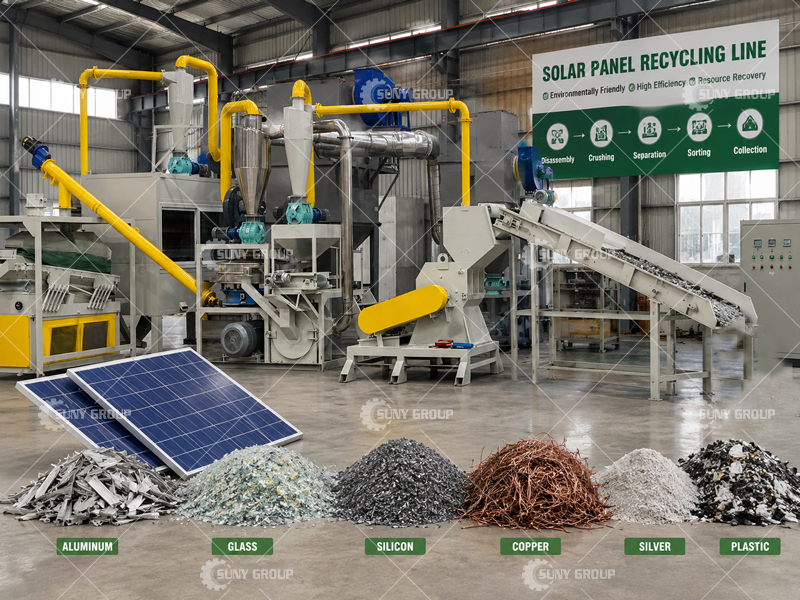
2. Solar Module Recycling Machines and Equipment
A solar module recycling plant usually requires several specialized machines to achieve efficient material separation.
Main Solar Panel Recycling Machines
Solar Panel Dismantling Machine
Used to remove aluminum frames and junction boxes automatically.
Glass Removal Machine
Separates tempered glass from the solar panel surface.
Crushing and Shredding Machine
Breaks solar panels into smaller particles for further processing.
Hammer Crusher
Further crushes materials into fine granules.
Air Separation System
Separates lightweight plastic materials from heavy metals.
Magnetic Separator
Removes iron and magnetic materials.
Electrostatic Separator
Separates conductive and non-conductive materials.
Dust Collection System
Controls dust pollution and improves environmental safety.
3. Solar Panel Recycling Production Line Configuration
A complete solar module recycling production line is designed for automatic and continuous processing.
Typical Production Process
- Solar panel feeding
- Aluminum frame removal
- Junction box separation
- Glass separation
- Crushing and shredding
- Metal and plastic separation
- Fine material sorting
- Final material collection
Advantages of Automated Recycling Lines
- High recycling efficiency
- Stable operation
- Low labor costs
- High material purity
- Environmentally friendly production
- Large processing capacity
Modern recycling lines can achieve high recovery rates for glass, aluminum, and precious metals.
4. Final Recycled Materials and Applications
After processing by solar module recycling machines, several valuable materials can be recovered.
Recovered Materials
Aluminum
Used in:
- Construction materials
- Automotive manufacturing
- Industrial metal products
Glass
Applied in:
- Glass manufacturing
- Building materials
- Fiberglass production
Copper
Reused in:
- Electrical cable manufacturing
- Electronics industry
- Metal smelting plants
Silicon Powder
Used in:
- Solar cell production
- Semiconductor industries
- Chemical manufacturing
Silver Materials
Applied in:
- Electronics
- Conductive materials
- Precious metal refining
Solar module recycling machines play an important role in the renewable energy recycling industry. As more solar panels reach the end of their lifespan, efficient recycling systems are becoming essential for resource recovery and environmental protection.
By using advanced solar panel recycling production lines, businesses can recover valuable materials such as aluminum, glass, copper, silicon, and silver while reducing waste pollution. With strong market demand and growing environmental awareness, solar panel recycling has become a highly promising and profitable industry worldwide.