


Waste Solar Panel Recycling Plant
With the rapid development of renewable energy, the number of solar photovoltaic (PV) panels installed worldwide is increasing significantly. After 20–30 years of operation, many solar panels will reach the end of their service life and become waste solar panels. Instead of sending them to landfills, these panels can be processed through a Waste Solar Panel Recycling Plant to recover valuable materials and reduce environmental pollution.
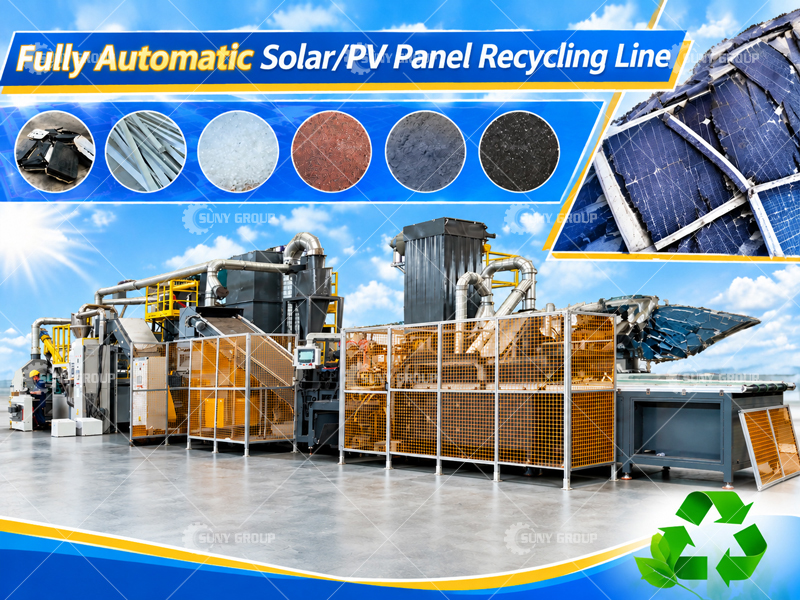
A professional solar panel recycling plant can separate glass, aluminum, silicon, copper, silver, and other valuable components, turning waste photovoltaic panels into reusable resources and creating economic benefits.
Why Do Waste Solar Panels Need Recycling?
Although solar panels are considered clean energy equipment, waste panels contain valuable materials and require proper treatment.
The main reasons for recycling waste solar panels include:
1. Reduce Environmental Pollution
Old solar panels contain materials such as glass, metals, polymers, and semiconductor materials. Improper disposal may occupy large landfill space and cause resource waste. Recycling helps reduce environmental pressure and supports sustainable development.
2. Recover Valuable Resources
A solar panel consists of approximately:
- 70–80% Glass
- 10–15% Aluminum Frame
- 5–10% Silicon Solar Cells
- Small amounts of Copper, Silver, and other metals
- Plastic backing materials and EVA film
Through recycling technology, most of these materials can be recovered and reused.
3. Meet Growing Solar Waste Demand
As early solar power projects enter the retirement stage, the global amount of waste solar panels is expected to increase rapidly. Building a solar panel recycling plant provides a long-term business opportunity.
Is Waste Solar Panel Recycling Valuable?
Yes, waste solar panel recycling has significant economic value. Although glass accounts for the largest proportion of solar panels, valuable metals and silicon materials provide additional income.
The main recyclable materials include:
1. Glass
Glass is the largest component of photovoltaic panels. After cleaning and processing, recycled glass can be used for:
- New glass production
- Construction materials
- Fiberglass manufacturing
Glass recycling reduces raw material consumption and transportation costs.
2. Aluminum Frame
The aluminum frame has high recycling value because aluminum can be repeatedly recycled without losing quality.
Applications include:
- New aluminum products
- Construction materials
- Industrial components
3. Silicon Materials
Silicon wafers are one of the most valuable components in solar panels. Recovered silicon can be purified and reused for:
- New solar cells
- Semiconductor production
- Industrial applications
4. Copper and Silver
Solar panels contain small amounts of precious metals:
- Copper can be recycled for electrical products.
- Silver can be recovered from solar cells due to its high market value.
Although the quantity is small, silver recovery can significantly improve the profitability of recycling plants.
How to Build a Waste Solar Panel Recycling Plant?
A complete Waste Solar Panel Recycling Plant usually includes several processing stages:
1. Solar Panel Dismantling System
The first step is removing:
- Aluminum frames
- Junction boxes
- Cables
Automatic dismantling equipment improves efficiency and reduces labor costs.
2. Crushing and Separation System
After dismantling, solar panels enter crushing equipment to separate different materials.
Main equipment includes:
- Shredders
- Crushers
- Conveyors
- Vibrating screens
The crushing process breaks panels into smaller particles for further separation.
3. Glass and Metal Separation
Advanced separation technology is used to recover different materials:
- Magnetic separators remove ferrous metals.
- Air separators separate lightweight materials.
- Screening systems classify different particle sizes.
4. Silicon and Precious Metal Recovery
Advanced recycling plants may include chemical or thermal treatment systems to recover:
- Silicon
- Silver
- Copper
This increases the overall economic value of recovered materials.
Applications and Economic Value of Recycled Materials
The recycled materials from waste solar panels have wide applications:
Recycled Glass
Used in:
- Building materials
- New glass products
- Industrial applications
Recycled Aluminum
Used for:
- Automotive parts
- Construction materials
- Aluminum products
Recycled Silicon
Used in:
- Solar panel manufacturing
- Semiconductor industries
Recovered Silver and Copper
Used in:
- Electronics
- Electrical equipment
- Industrial manufacturing
The revenue of a solar panel recycling plant depends on many factors, including:
- Processing capacity
- Recycling technology
- Local waste panel supply
- Material market prices
- Recovery efficiency
A high-efficiency recycling line can significantly improve material recovery rates and increase profitability.
Advantages of Waste Solar Panel Recycling Plant
A professional solar panel recycling plant provides several benefits:
- High Resource Recovery Rate
Advanced technology can recover most valuable materials from waste solar panels. - Environmental Protection
Reduces landfill waste and promotes circular economy development. - Multiple Revenue Sources
Income comes from recovered glass, aluminum, silicon, copper, and silver. - Strong Market Potential
The increasing retirement of solar panels creates continuous demand for recycling services. - Customized Solutions
Recycling plants can be designed according to different capacities, investment budgets, and local requirements.
Waste Solar Panel Recycling Plant is an important solution for managing end-of-life photovoltaic panels. Waste solar panels are not simply waste materials but valuable resources containing glass, aluminum, silicon, copper, and silver. By using advanced dismantling, crushing, and separation technology, these materials can be recovered and reused in various industries.
With the continuous growth of solar energy worldwide, investing in a solar panel recycling plant offers both environmental benefits and long-term economic opportunities, making it a promising industry for the future.