


PV Solar Panels Recycling Plant
PV solar panels recycling plant is a specialized facility designed to process end-of-life photovoltaic (PV) modules and recover valuable materials such as glass, aluminum, silicon, and precious metals. With the rapid expansion of solar energy worldwide, the number of discarded solar panels is increasing significantly, making recycling an essential part of the renewable energy lifecycle.
1. Where Are Solar Panels Most Widely Used?
Solar panels are mainly concentrated in regions with strong renewable energy policies and high electricity demand. The largest installations are found in:
- China – The world’s largest solar panel producer and installer
- Europe (Germany, Spain, Italy, Netherlands) – Early adopters of solar energy policies
- United States (California, Texas, Arizona) – Large utility-scale solar farms
- India – Rapidly expanding solar infrastructure
- Middle East (UAE, Saudi Arabia) – High solar radiation and desert solar projects
- Australia – Strong rooftop solar penetration
These regions also generate the highest future volume of waste solar panels.
2. Why Solar Panels Need to Be Recycled
Recycling PV modules is necessary for environmental and economic reasons:
- Solar panels have a lifespan of 25–30 years
- Large-scale installations are now reaching end-of-life phase
- Panels contain valuable but non-biodegradable materials
- Improper disposal can cause environmental pollution
- Recovery reduces dependence on raw material mining
- Supports circular economy in renewable energy industry
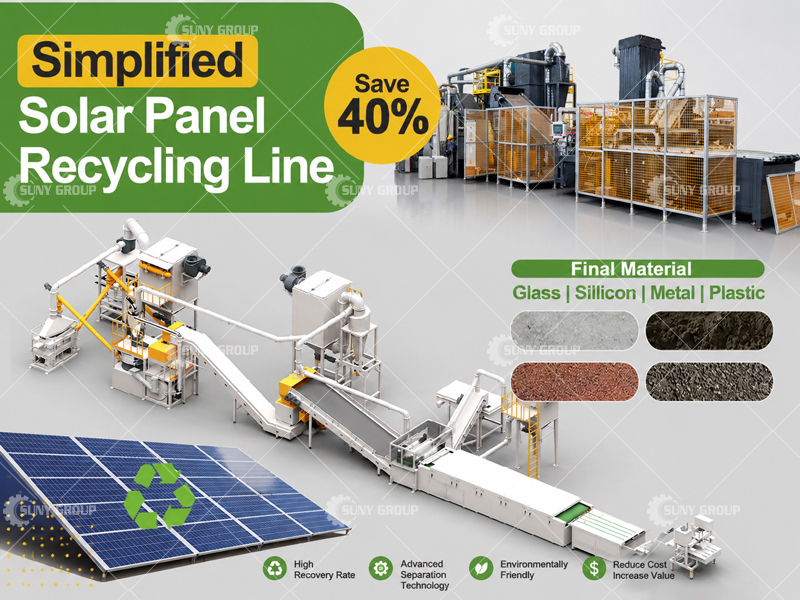
3. How to Build a PV Solar Panels Recycling Plant
A complete recycling plant typically includes the following systems:
3.1 Pre-treatment System
- Manual dismantling of aluminum frames
- Junction box removal
- Glass separation (if required)
3.2 Crushing and Shredding System
- Breaks PV modules into smaller pieces
- Prepares materials for separation process
3.3 Separation System
- Mechanical separation of glass, metal, and silicon
- Air classification and vibration screening
3.4 Metal Recovery System
- Recovers aluminum, copper, and small amounts of silver
- Magnetic and eddy current separation
3.5 Dust and Emission Control System
- Filters fine silicon powder and hazardous dust
- Ensures environmental compliance
Key factors when building a plant:
- Capacity design (1–10 tons/hour or more)
- Automation level (manual, semi-auto, or fully automatic)
- Environmental regulations compliance
- Material recovery efficiency optimization
4. Materials Recovered from Solar Panels
After recycling PV modules, several valuable materials can be recovered:
- Glass (70–75%) → Used in construction materials and new glass products
- Aluminum (8–10%) → Reused in frames, automotive, and machinery
- Silicon (3–5%) → Reprocessed for semiconductor or solar reuse
- Copper (1–2%) → Electrical applications and cable production
- Silver (trace amount) → Electronics and high-value industrial use
- Plastic/EVA material → Energy recovery or industrial reuse
5. Recycling Rate and Efficiency
Modern PV recycling plants can achieve:
- Overall recycling rate: 90%–95%
- Aluminum recovery: nearly 100%
- Glass recovery: up to 95%
- Silicon recovery: 85%–90% depending on technology
- Precious metals recovery: high-value selective extraction
Advanced pyrolysis and mechanical separation systems significantly improve efficiency.
PV solar panels recycling plant plays a critical role in managing the growing volume of end-of-life solar modules worldwide. With major solar installations located in China, Europe, the United States, India, and other sunny regions, recycling demand will continue to rise. By building a modern recycling facility with advanced separation and recovery systems, businesses can efficiently extract valuable materials while supporting environmental sustainability and the global green energy transition.