


Line for Recycling Solar Panels
With the rapid expansion of solar energy worldwide, the number of waste and end-of-life solar panels is increasing every year. A professional line for recycling solar panels provides an efficient solution to process discarded photovoltaic (PV) modules, recover valuable materials, and reduce environmental impact.
The line for recycling solar panels is a complete production system that integrates dismantling, crushing, sorting, and separation technologies. It can automatically separate glass, aluminum, silicon, copper, plastic, and other materials from waste solar panels, helping recycling companies achieve resource recovery and sustainable development.
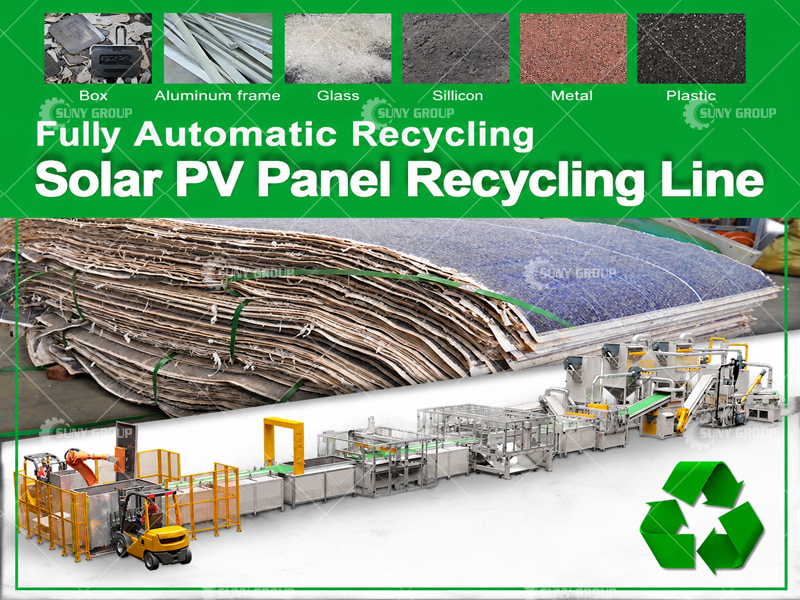
Why Do Solar Panels Need to Be Recycled?
Solar panels usually have a service life of 20–30 years. After long-term operation, panels may become damaged, inefficient, or unable to generate enough electricity. Instead of sending them to landfills, recycling solar panels can create significant economic and environmental value.
The main reasons for recycling solar panels include:
1. Recover Valuable Resources
Solar panels contain many recyclable materials, including:
- Glass
- Aluminum frames
- Silicon wafers
- Copper wires
- Silver and other metals
- Plastic layers
Through a line for recycling solar panels, these materials can be efficiently recovered and reused in new manufacturing industries.
2. Reduce Environmental Pollution
Large-scale solar panel waste can occupy valuable land resources and create environmental challenges. Recycling helps reduce landfill pressure and supports a cleaner energy cycle.
3. Increase Economic Benefits
Recovered materials have high market value. Recycling companies can sell recycled glass, aluminum, silicon powder, and metal materials to generate additional profits.
4. Promote Sustainable Solar Energy Development
A complete recycling system allows solar panels to achieve a closed-loop lifecycle, reducing raw material consumption and supporting the circular economy.
How to Configure a Line for Recycling Solar Panels?
A complete line for recycling solar panels should be customized according to processing capacity, automation requirements, and recycling targets.
The main equipment configuration includes:
1. Solar Panel Feeding System
The feeding system transfers waste solar panels into the production line safely and continuously.
Features:
- Stable material feeding
- Reduced manual operation
- Improved production efficiency
2. Frame and Junction Box Removal System
Before crushing, aluminum frames and junction boxes need to be removed.
This process can recover:
- Aluminum frames
- Copper cables
- Junction boxes
It also protects the following equipment and improves recycling efficiency.
3. Crushing and Shredding System
The crushing system is the core part of the line for recycling solar panels.
Main functions:
- Break solar modules into smaller pieces
- Release glass and silicon materials
- Improve separation efficiency
High-performance shredders and crushers ensure stable operation and high recovery rates.
4. Screening and Separation System
After crushing, different materials are separated through advanced sorting equipment.
Common equipment includes:
- Vibrating screens
- Air separators
- Magnetic separators
- Eddy current separators
This process improves the purity and commercial value of recycled products.
5. Dust Collection System
During the recycling process, fine particles may be generated. A dust removal system helps:
- Reduce dust emissions
- Protect workers
- Improve environmental performance
Recovered Materials and Their Value from Solar Panel Recycling Line
A high-quality line for recycling solar panels can recover various valuable materials.
1. Glass
Glass is the largest component of solar panels, accounting for a significant proportion of the total weight.
Value and applications:
- New glass production
- Construction materials
- Fiberglass manufacturing
2. Aluminum Frame
Aluminum frames have high recycling value because aluminum can be recycled repeatedly.
Applications:
- New aluminum products
- Solar panel frames
- Industrial materials
3. Silicon Powder
Silicon is an important material recovered from photovoltaic panels.
Applications:
- Solar cell manufacturing
- Semiconductor industry
- Industrial silicon products
4. Copper and Metals
Copper cables and metal components can be separated and recycled.
Applications:
- Electrical products
- Metal processing industries
- Manufacturing materials
5. Plastic Materials
Plastic layers from solar panels can also be separated and reused.
Applications:
- Plastic products
- Energy recovery
- Composite materials
Advantages and Features of Line for Recycling Solar Panels
A modern line for recycling solar panels offers several important advantages:
1. High Recovery Efficiency
Advanced crushing and sorting technology allows maximum recovery of valuable materials with high purity.
2. Fully Automatic Processing
The complete line can integrate:
- Automatic feeding
- Intelligent control
- Continuous operation
- Automatic material collection
This reduces labor costs and improves production capacity.
3. Environmentally Friendly Operation
The recycling line is equipped with dust removal and pollution control systems to meet environmental requirements.
4. Flexible Production Capacity
The system can be customized for different applications:
- Small solar recycling workshops
- Medium recycling facilities
- Large industrial recycling plants
5. Lower Operating Cost
Compared with manual recycling methods, an automatic recycling line improves efficiency, reduces labor requirements, and increases profitability.
How to Choose a Manufacturer for Line for Recycling Solar Panels?
When investing in a solar panel recycling project, choosing the right manufacturer is very important.
Consider the following factors:
1. Professional Recycling Experience
Select a manufacturer with experience in photovoltaic recycling technology and successful project cases.
2. Complete Technical Solution
A reliable supplier should provide:
- Production line design
- Equipment manufacturing
- Installation guidance
- Commissioning service
- Technical support
3. Customized Configuration
The manufacturer should design the recycling line according to:
- Processing capacity
- Solar panel types
- Available factory space
- Final recycled material requirements
4. Equipment Quality and After-Sales Service
High-quality equipment ensures stable operation and long service life. Good after-sales support helps customers maintain continuous production.
A line for recycling solar panels is an advanced solution for processing waste photovoltaic modules and recovering valuable resources. Through professional dismantling, crushing, and separation technology, the recycling line can efficiently recover glass, aluminum, silicon, copper, and plastic materials.
With the increasing demand for renewable energy and sustainable resource management, investing in a complete line for recycling solar panels offers significant opportunities for environmental protection, resource recovery, and long-term business growth.