


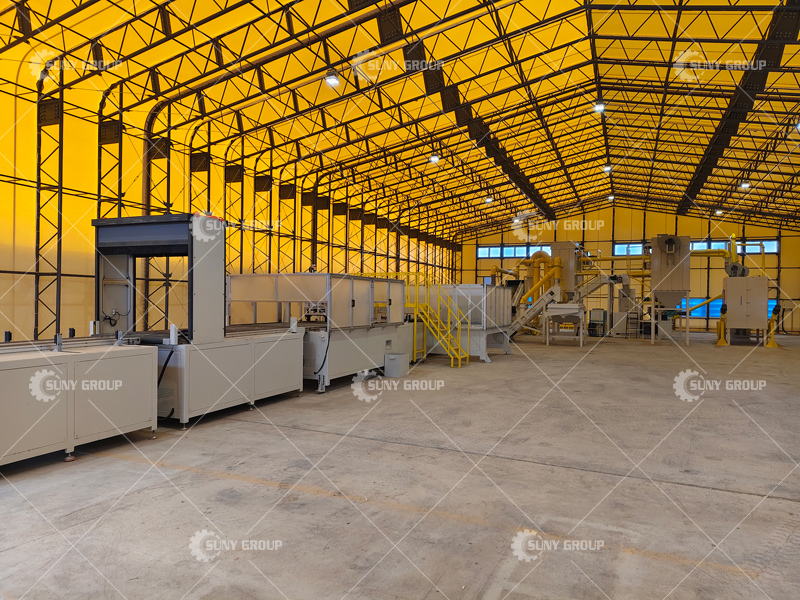
Industrial Solar Panel Waste Recycling Plant
With the rapid growth of renewable energy, millions of solar panels are being installed worldwide every year. Although photovoltaic (PV) modules can generate clean electricity for 25–30 years, they eventually reach the end of their service life due to aging, damage, performance degradation, or technological upgrades. This creates a growing amount of solar panel waste.
Building an Industrial Solar Panel Waste Recycling Plant is an effective solution to reduce environmental pressure, recover valuable materials, and support the development of a circular economy. A professional recycling facility can process large quantities of discarded solar panels and separate useful materials such as glass, aluminum, silicon, copper, and other valuable components.
Why Should Waste Solar Panels Be Recycled?
Waste solar panels contain many recyclable materials. If they are directly discarded in landfills, valuable resources will be wasted and potential environmental risks may increase.
The main reasons for recycling old PV panels include:
1. Recover Valuable Materials
A solar panel is mainly composed of:
- Glass: Around 70–80% of a typical PV module weight, which can be reused for new glass products.
- Aluminum Frame: Highly recyclable and widely used in construction and manufacturing industries.
- Silicon Cells: Can be recovered and purified for new solar products.
- Copper and Other Metals: Valuable materials with high recycling value.
Through advanced recycling technology, these materials can be collected and reused instead of extracting new raw materials.
2. Reduce Environmental Pollution
Improper disposal of solar panels may cause resource waste and increase landfill pressure. Industrial recycling plants use professional processes to safely remove hazardous substances, prevent pollution, and ensure environmentally responsible treatment.
3. Support Sustainable Solar Energy Development
Solar energy is considered a clean energy source, but the entire lifecycle of solar panels should also be sustainable. Recycling PV modules helps create a closed-loop system where old panels become resources for new products.
How to Build an Industrial Solar Panel Waste Recycling Plant?
Establishing an industrial-scale solar panel recycling plant requires professional planning, suitable equipment, and efficient process design.
1. Analyze Recycling Capacity and Raw Material Supply
Before construction, investors should evaluate:
- Available solar panel waste volume
- Expected processing capacity
- Local recycling regulations
- Final product markets
Industrial plants can be designed according to different capacities, such as several hundred kilograms per hour or several tons per hour.
2. Choose the Right Solar Panel Recycling Process
A complete industrial solar panel recycling line usually includes the following steps:
Step 1: Solar Panel Dismantling
The first stage removes external components:
- Aluminum frame removal
- Junction box separation
- Cable cutting
This process improves recovery efficiency and protects downstream equipment.
Step 2: Crushing and Shredding
After dismantling, PV modules are crushed into smaller pieces. Industrial shredders and crushers help break the laminated structure of solar panels and release valuable materials.
Step 3: Material Separation
Advanced separation systems are used to separate different materials:
- Magnetic separation for ferrous metals
- Air separation for lightweight materials
- Screening systems for different particle sizes
- Electrostatic separation for fine materials
Step 4: Material Collection and Reuse
The recovered materials can be processed and supplied to different industries:
- Glass → new glass products
- Aluminum → metal manufacturing
- Silicon → photovoltaic production
- Copper → electrical applications
Advantages and Features of Industrial Solar Panel Recycling Plants
Compared with small-scale recycling operations, industrial recycling plants provide higher efficiency, automation, and profitability.
1. High Processing Capacity
Industrial PV recycling plants are designed for continuous operation and can handle large amounts of solar panel waste. This makes them suitable for recycling companies, solar farms, and waste management enterprises.
2. High Material Recovery Rate
Professional recycling equipment can achieve efficient separation and maximize the recovery of valuable materials, improving economic returns.
3. Automated Operation
Modern solar panel recycling systems integrate:
- Automatic feeding systems
- Intelligent control systems
- Dust collection equipment
- Continuous processing technology
Automation reduces labor costs and improves production stability.
4. Environmentally Friendly Design
Industrial recycling plants usually adopt:
- Dust removal systems
- Low-energy consumption equipment
- Safe material handling processes
These features help companies meet environmental protection standards.
Environmental Benefits of Building a Solar Panel Recycling Plant
An Industrial Solar Panel Waste Recycling Plant provides significant environmental advantages:
Reduce Landfill Waste
Recycling prevents millions of discarded solar modules from entering landfills and reduces waste disposal pressure.
Save Natural Resources
Recovering aluminum, glass, silicon, and metals reduces the need for mining new raw materials.
Reduce Carbon Emissions
Using recycled materials generally consumes less energy compared with producing materials from virgin resources.
Promote Circular Economy
Solar panel recycling creates a sustainable material cycle and improves the overall environmental performance of the renewable energy industry.
Economic Benefits of Solar Panel Recycling Business
Besides environmental advantages, PV recycling also creates strong economic opportunities.
1. Valuable Recovered Materials
Recovered materials can generate revenue through:
- Aluminum sales
- Glass recycling
- Silicon recovery
- Metal recycling
2. Growing Market Demand
As global solar installations continue increasing, the amount of retired PV modules will grow significantly, creating long-term demand for recycling services.
3. New Business Opportunities
A solar panel recycling plant can provide services for:
- Solar power plants
- PV manufacturers
- Waste management companies
- Renewable energy projects
An Industrial Solar Panel Waste Recycling Plant is an important investment for the future renewable energy industry. By using advanced dismantling, crushing, and separation technologies, these plants can efficiently recover valuable materials from discarded photovoltaic panels.
Building a professional PV recycling facility not only reduces environmental pollution but also creates economic value through resource recovery. With the continuous expansion of solar energy worldwide, industrial solar panel recycling will become an essential part of sustainable energy development.