


Solar Panel Recycling Facilities
As the global adoption of solar energy accelerates, managing end-of-life photovoltaic modules has become essential. Solar panel recycling facilities are designed to recover valuable materials, reduce environmental impact, and support a circular economy.
1. Recycling Value of Solar Panels
Solar panels, especially those based on Photovoltaics, contain multiple reusable materials. With millions of panels reaching the end of their lifespan (typically 20–30 years), recycling is both economically and environmentally critical.
Key Values:
- Resource Recovery: Extract valuable materials like silicon, silver, and aluminum
- Environmental Protection: Prevent landfill waste and hazardous leakage
- Cost Efficiency: Reduce dependence on raw material mining
- Regulatory Compliance: Meet global e-waste recycling standards
2. Structure and Composition of Solar Panels
Understanding the structure of solar panels helps explain the recycling process.
Main Components:
- Tempered Glass (≈70–75%)
Protects internal layers and provides durability - Aluminum Frame (≈10%)
Ensures structural strength and easy installation - Silicon Solar Cells (≈3–5%)
Core component responsible for electricity generation - EVA (Ethylene Vinyl Acetate) Layer
Encapsulates and protects solar cells - Backsheet (Polymer Layer)
Provides insulation and weather resistance - Junction Box and Wiring
Transfers generated electricity
3. Solar Panel Recycling Facilities Overview
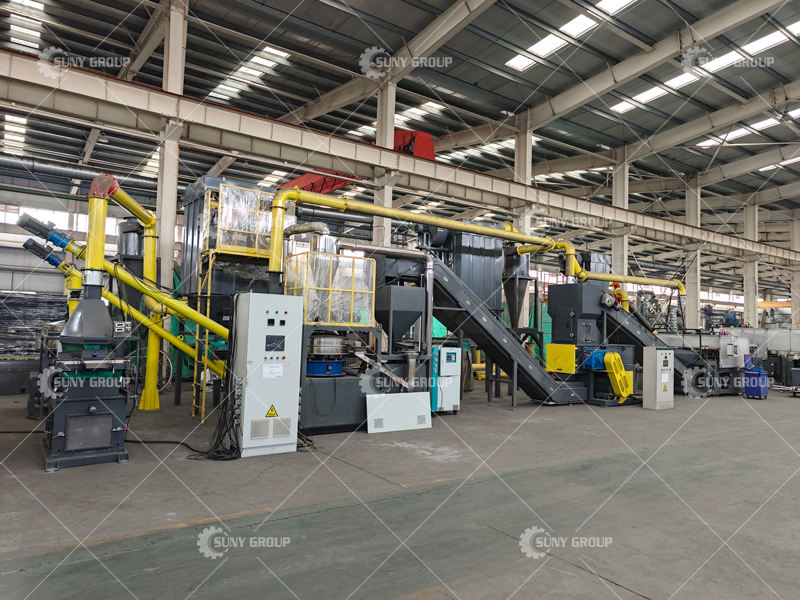
Modern recycling facilities use a combination of mechanical, thermal, and chemical processes to recover materials efficiently.
Core Equipment in Facilities:
- Dismantling System
Removes aluminum frames and junction boxes - Crushing and Shredding Units
Break panels into smaller particles - Separation Systems
Includes magnetic, air, and density separation - Thermal Treatment Furnaces
Decompose EVA layers and release bonded materials - Chemical Processing Units
Extract high-purity silicon and precious metals
These integrated systems ensure high recovery rates and material purity.
4. Solar Panel Recycling Process
The recycling workflow in solar panel recycling facilities typically follows these steps:
Step-by-Step Process:
- Collection and Transportation
End-of-life panels are collected from solar farms or rooftops - Manual or Automated Dismantling
Frames, cables, and junction boxes are removed - Crushing and Size Reduction
Panels are crushed into manageable fragments - Thermal or Mechanical Separation
EVA is removed, and layers are separated - Material Recovery
Glass, metals, and silicon are extracted - Refining and Purification
High-value materials like silver and silicon are purified for reuse
5. Recovered Materials and Their Applications
After processing, solar panel recycling facilities produce several reusable materials.
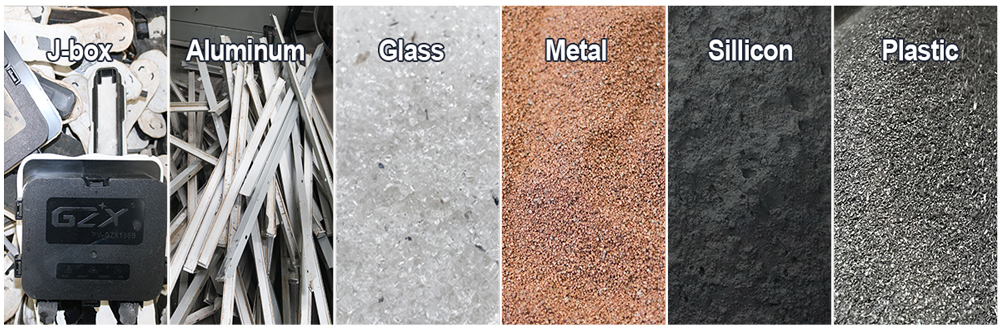
Recovered Materials:
- Glass
- Aluminum
- Silicon
- Copper and Silver
- Plastic Polymers
Applications:
- Glass → New glass products or construction materials
- Aluminum → Reused in frames and industrial components
- Silicon → Reprocessed for new solar cells or electronics
- Metals (Silver, Copper) → Used in electrical and electronic industries
- Plastics → Energy recovery or secondary plastic products
6. Economic and Environmental Benefits
Key Benefits:
- Reduced Landfill Waste
- Lower Carbon Emissions
- High Economic Return from Precious Metals
- Promotion of Circular Economy
Recycling solar panels not only conserves resources but also creates new business opportunities in the renewable energy sector.
Solar panel recycling facilities are essential for sustainable solar energy development. By efficiently recovering valuable materials and minimizing environmental impact, these facilities close the loop in the photovoltaic lifecycle. With increasing global demand for renewable energy, investing in advanced recycling technologies will be key to achieving long-term sustainability and economic efficiency.