


Waste Solar Panel Recycling Solution
With the rapid global expansion of solar energy systems over the past two decades, a large number of photovoltaic modules are now approaching the end of their service life. A typical solar panel operates for 20–30 years, meaning early installations are gradually becoming waste solar panel materials. Therefore, establishing an efficient waste solar panel recycling solution has become increasingly urgent for environmental protection and resource recovery.
Why Waste Solar Panel Recycling Is Urgent
The recycling of waste solar panel modules is critical for several reasons. First, discarded photovoltaic panels contain valuable materials such as glass, aluminum, silicon, silver, and copper. Without proper recycling, these resources are wasted. Second, some panels may contain potentially hazardous substances that require safe handling to avoid soil and water contamination. Third, the global volume of end-of-life panels is growing rapidly due to the large-scale deployment of solar systems in countries like China, United States, and Germany. Effective recycling reduces landfill pressure and supports the circular economy.
Main Waste Solar Panel Recycling Solutions
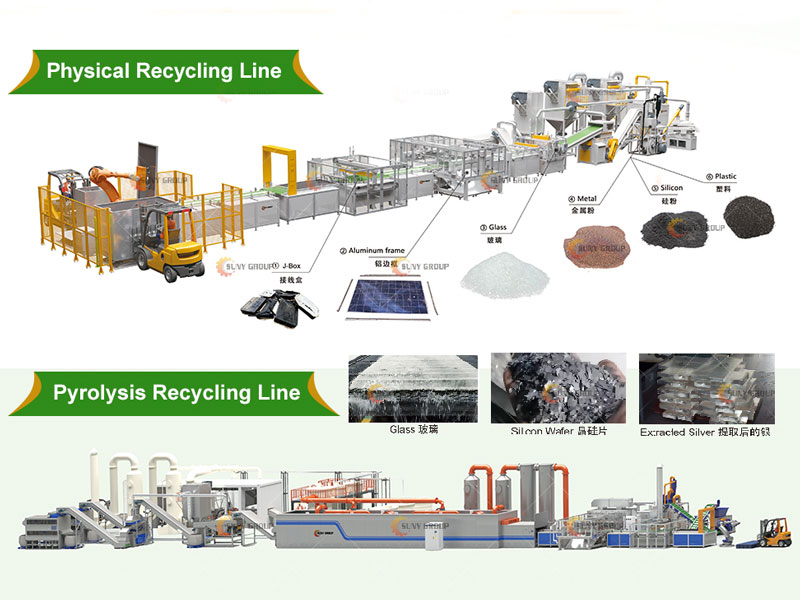
Currently, there are several major waste solar panel recycling solutions available in the market, each with distinct characteristics:
1.Mechanical Recycling Method
This solution involves dismantling the aluminum frame and junction box, followed by crushing and physical separation. It is cost-effective and suitable for large-scale processing, mainly recovering glass and metals.
2.Thermal Treatment (Pyrolysis) Method
Thermal recycling uses controlled heating to decompose the EVA encapsulation layer. It allows for better separation of silicon cells and improves material purity, but requires higher energy consumption.
3.Chemical Treatment Method
Chemical recycling uses solvents or chemical reactions to separate and purify valuable metals such as silver and silicon. It achieves high recovery rates but involves more complex environmental management.
4.Integrated Automated Recycling Line
Modern waste solar panel recycling plants combine dismantling, crushing, separation, and dust collection systems into a fully automated production line. This solution offers high efficiency, stable operation, and environmentally friendly performance.
The Value of Waste Solar Panel Recycling
Waste solar panel recycling has significant economic and environmental value. Recovered aluminum frames can be directly reused in manufacturing. Glass can be processed into construction materials. Silicon wafers can be purified and reused in new photovoltaic production. Precious metals such as silver and copper have high market value, improving overall recycling profitability.
Moreover, recycling reduces the need for mining raw materials, lowers carbon emissions, and supports sustainable development goals worldwide.
Applications of Recycled Materials
The materials recovered from waste solar panels are widely used in multiple industries. Recycled aluminum is used in construction and transportation sectors. Glass is applied in building materials and insulation products. Recovered silicon and metals are reused in electronics and renewable energy manufacturing industries.
In conclusion, implementing a professional waste solar panel recycling solution is essential for managing the growing volume of end-of-life photovoltaic modules. By combining advanced recycling technology with sustainable resource management, businesses can achieve both environmental protection and long-term economic benefits.
Next: