


Waste Solar Panel Recycling line Price
The global solar panel recycling market is growing rapidly due to the increasing volume of decommissioned photovoltaic (PV) modules reaching end-of-life. Solar panels typically have a lifespan of 25–30 years, meaning that the first large wave of retirements has begun and will accelerate through the 2030s and 2040s.
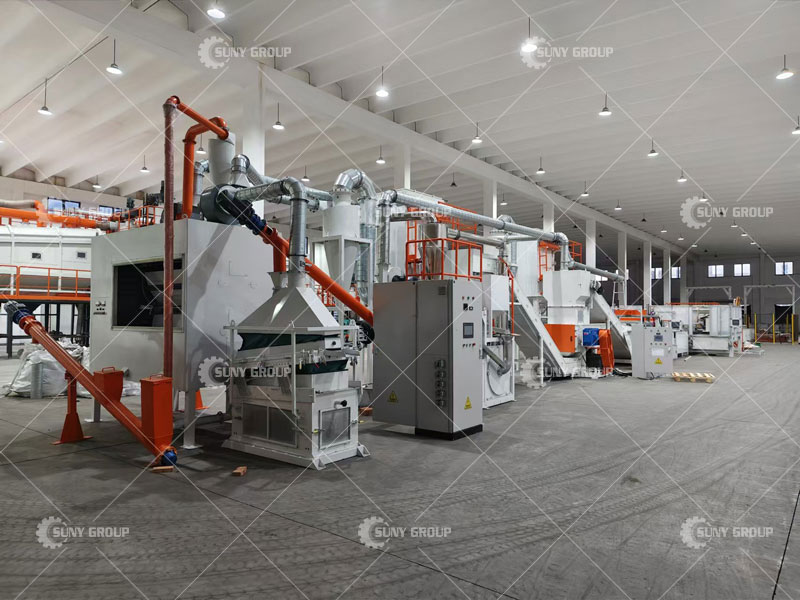
Market Size and Growth
-
The global solar panel recycling market was valued at around $3.65 billion in 2025 and is forecast to exceed $14 billion by 2034, with a compound annual growth rate (CAGR) above 15%.
-
Historical estimates show the market grew from around $2.6 billion in 2023.
-
Some projections suggest long-term cumulative waste could reach 60–78 million tonnes by 2050, underscoring the need for robust recycling infrastructure.
Recycling Adoption
Despite strong policy drivers in regions like the European Union (WEEE directive) and increasing interest in North America and Asia Pacific, less than 10% of decommissioned panels are currently recycled through specialized operations. Most end-of-life modules still go to landfills or general e-waste facilities, limiting recovery efficiency.
Value & Profitability of Recycled Solar Panels
Materials with Value
Solar modules contain key materials that can be recovered, including:
-
Glass: Most abundant (up to ~80–90% of weight) — though lower per-unit price.
-
Aluminum frames: Valuable in metal markets.
-
Copper: From wiring and connectors.
-
Silver: Though only ~0.05% by weight, constitutes a disproportionate share of material value.
-
Polysilicon: Valuable but energy-intensive to recover.
Estimated Material Value
-
By 2037, recycled materials from solar waste could be worth billions of dollars globally, with China alone potentially generating ~$3.8 billion in value and Europe and North America significant contributions.
Profitability Challenges
-
Current recycling costs can range from $15–$45 per panel (transport, processing, regulatory compliance), often exceeding the direct material value recovered in many regions.
-
Profitability improves significantly with scale, automation, and supportive regulations that allocate collection or producer responsibility fees.
Building a Solar Panel Recycling Plant
Step-by-Step Guide
-
Market Research & Permits
-
Assess local/regional waste volume and regulatory frameworks.
-
Secure environmental and industrial permits for hazardous material handling.
-
-
Technology & Plant Selection
-
Choose technology based on throughput and desired recovery efficiency:
-
Manual / Semi-Auto line: lower cost, good for pilot startups.
-
Mechanical + Separation: mid-range solution with ~70-80% recovery.
-
Thermal & Chemical Processes: industrial scale with highest yields.
-
-
-
Facility & Workforce
-
Located near solar waste sources to reduce transport costs.
-
Hire technicians trained in mechanical, chemical, and safety procedures.
-
-
Logistics & Supply Chain
-
Establish panel collection networks and partnerships with installers, utilities, and manufacturers.
-
Implement tracking systems for end-of-life panels.
-
-
Sales & Offtake Agreements
-
Secure buyers for recovered commodities (glass, metals, polysilicon) and recycled materials.
-
Estimated Costs
| Plant Type | Throughput | Estimated Cost (USD) | Best For |
|---|---|---|---|
| Manual / Semi-Auto | Low | $50k–$150k | Startup / Pilot projects |
| Mechanical System | Mid | $200k–$600k | Regional processors |
| Industrial Thermal/Chemical | High | $800k–$2.5M+ | High-efficiency recovery |
Uses of Recovered Materials & Industry Applications
Material End Uses
-
Glass: recycled into new PV glass or insulating products.
-
Aluminum & Copper: reused in building materials, automotive parts, and electronics.
-
Silver & Polysilicon: refined and reused in new photovoltaic manufacturing.
-
Silicon Wafers: potentially recycled into new solar cells or advanced electronics.
Key Sectors Benefiting
-
Solar Panel Manufacturing: recycled feedstock reduces raw material costs.
-
Construction & Building Materials: recycled glass and aluminum.
-
Automotive & Electronics: copper and refined silicon alloys.
-
Battery & Energy Storage: advancing research into silicon-based battery materials.
Solar panel recycling is poised for rapid global growth as installed capacity ages out. While economic viability currently varies by region, advances in technology, improved regulations, and rising raw material prices make recycling an increasingly attractive business. Careful planning, scaling and supply chain development are essential to build a profitable recycling plant that supports circular economy goals and sustainable energy value chains.
Next: