


Solar Recycling Plant
Solar energy adoption has skyrocketed worldwide, leading to an increasing number of end-of-life solar panels. solar recycling plant is becoming essential to manage photovoltaic (PV) waste responsibly and extract valuable materials. This article explores the future prospects, economic value, recycling line setup, and the products generated from recycling, offering a comprehensive overview for investors and policymakers.
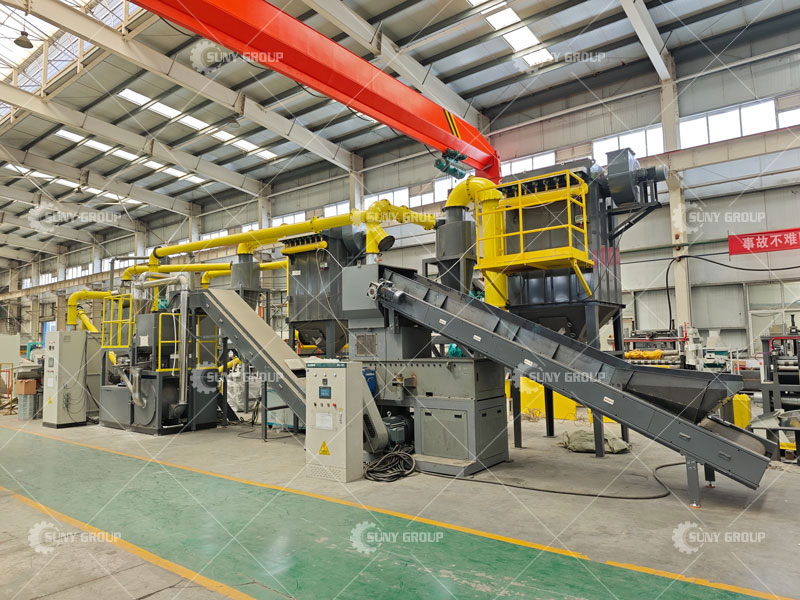
Market Prospects of Solar Panel Recycling
The global solar panel recycling market is driven by rapid solar installations and environmental regulations that mandate sustainable end-of-life management.
Key Growth Drivers
-
Rising solar energy installations globally (especially in China, EU, and the US).
-
Government policies enforcing PV waste recycling and circular economy standards.
-
Scarcity and rising prices of critical raw materials (silver, silicon, aluminum).
-
Public demand for green and sustainable technologies.
Future Outlook
Solar panels typically last 25–30 years; many early installations are now approaching retirement. This creates a growing volume of photovoltaic waste — transforming recycling from a niche service to an industry necessity.
Market projections include:
-
Exponential increase in recyclable PV waste by 2030 and beyond.
-
Expansion of specialized PV recycling facilities and advanced technologies.
-
Integration with broader e-waste recycling ecosystems.
Economic Value of Solar Panel Recycling
Recycling solar panels offers significant economic opportunities, both from material recovery and operational services.
Material Value in Solar Panels
Solar panels contain valuable components, including:
-
Glass (≈75–80% by weight) – reusable in new panels or construction.
-
Aluminum frames – highly recyclable and widely marketable.
-
Silicon wafers and cells – recoverable for reuse or resale.
-
Silver and copper – valuable precious and industrial metals.
-
EVA and plastics – used in secondary industries.
Revenue Streams from Recycling
A solar panel recycling plant can generate income from:
-
Sale of Recovered Materials:
-
Glass, aluminum, copper, silver, and silicon.
-
-
Recycling Fees:
-
Charging manufacturers or installers for end-of-life panel processing.
-
-
Government Incentives:
-
Tax credits or subsidies for sustainable waste management.
-
-
By-Product Innovation:
-
Using recovered materials in new applications (e.g., construction products).
-
Solar Panel Recycling Line Configuration
A modern solar panel recycling line combines mechanical, thermal, and chemical processing to maximize material recovery.
Typical Recycling Line Setup
-
Pre-Sorting & Inspection:
-
Manual removal of non-PV parts; classification of panel types.
-
-
Frame and Junction Box Removal:
-
Detaching aluminum frames and electrical components.
-
-
Crushing & Shredding:
-
Mechanical size reduction of panels.
-
-
Separation Processes:
-
Glass separation: mechanical and vibratory methods.
-
Metals recovery: eddy current separators for aluminum/copper.
-
Silicon cell extraction: thermal delamination or chemical processes.
-
-
Advanced Recovery:
-
Chemical treatments to recover silver and high-purity silicon.
-
Technology Trends
-
Thermal delamination technologies to separate EVA and glass efficiently.
-
Automated sorting and robotics for higher throughput.
-
Closed-loop water and chemical systems to reduce environmental impact.
SEO keywords: solar panel recycling process, PV recycling line equipment, photovoltaic recycling technology.
Products and Economic Outputs
After processing, a solar panel recycling plant can generate:
Recovered Materials
-
Recycled glass – bulk commodity for glass manufacturing.
-
Aluminum and copper – sold to metal markets.
-
Silver and silicon – high-value materials for tech reuse.
-
Plastics and polymers – feedstock for secondary industries.
Secondary Products
-
Construction materials (e.g., recycled glass aggregates).
-
Raw material bundles for new solar panel manufacturing.
Solar panel recycling plants are positioned at the intersection of sustainable waste management and high-value material recovery. With growing solar installations and advancing recycling technologies, the economic prospects are strong. Investors, manufacturers, and environmental stakeholders should consider recycling as both a business opportunity and a critical component of a circular solar economy.
Next: