


Solar Panel Recycling System with Dust Removal
As the global installation of photovoltaic (PV) systems continues to grow, the number of end-of-life solar panels is increasing rapidly. This trend has made solar panel recycling systems with dust removal an essential solution for safe, efficient, and environmentally responsible PV module recycling. During crushing, shredding, and separation processes, large amounts of dust may be generated, making dust prevention and removal a critical part of modern solar panel recycling lines.
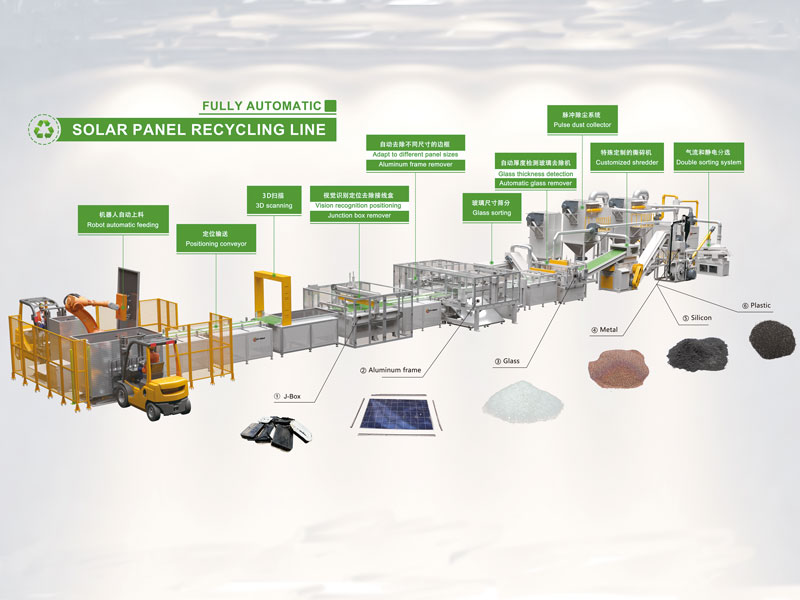
Why Dust Control Is Necessary in Solar Panel Recycling
Solar panels are composed of glass, aluminum frames, silicon cells, polymers, and trace metals. When panels are dismantled and crushed, fine dust particles are released, especially from tempered glass and silicon wafers. Without proper dust control, these particles can:
-
Pollute the surrounding air and working environment
-
Pose health risks to operators
-
Cause equipment wear and blockage
-
Violate environmental protection regulations
Therefore, integrating a dust removal system into a solar panel recycling system is not optional—it is a key requirement for sustainable recycling operations.
How to Prevent Dust in a Solar Panel Recycling System
Solar panel recycling system with dust removal adopts multiple technical measures to control dust at its source and during material handling. Common dust prevention methods include:
1.Fully Enclosed Equipment Design
Crushers, shredders, and conveyors are sealed to prevent dust leakage during operation.
2.Negative Pressure Dust Collection
Fans create negative pressure inside processing units, ensuring dust is drawn into the collection system instead of escaping.
3.Multi-Stage Dust Filtration
Cyclone separators, bag filters, and cartridge filters are used to capture both coarse and ultra-fine particles.
4.Automatic Dust Discharge
Collected dust is automatically discharged into sealed containers for further treatment or safe disposal.
Application of Dust Removal Systems in Solar Panel Recycling Lines
In a complete solar panel recycling system with dust removal, the dust collection system is applied across several stages:
-
Panel Crushing and Shredding Stage: High-efficiency dust hoods are installed near crushers and shredders.
-
Glass and Material Separation Stage: Air classifiers and vibrating screens are connected to centralized dust collectors.
-
Conveying and Storage Stage: Enclosed belt conveyors and sealed storage bins minimize secondary dust emissions.
These integrated applications ensure continuous dust control throughout the entire recycling process.
Environmental Significance of Dust Removal in PV Recycling
The use of a dust removal system in solar panel recycling has significant environmental benefits:
-
Improved Air Quality: Reduces PM2.5 and PM10 emissions in recycling plants
-
Worker Health Protection: Lowers the risk of respiratory diseases
-
Regulatory Compliance: Meets strict environmental and industrial safety standards
-
Resource Sustainability: Supports green recycling and circular economy goals
By minimizing dust pollution, solar panel recycling becomes a truly eco-friendly industrial activity.
Advantages and Features of a Solar Panel Recycling Line with Dust Removal
Compared with conventional recycling lines, a solar panel recycling system with dust removal offers clear advantages:
-
Higher Operational Safety: Cleaner workshops and safer working conditions
-
Stable Equipment Performance: Reduced wear and lower maintenance costs
-
Higher Material Recovery Rate: Clean separation improves glass, aluminum, and silicon purity
-
Modular and Scalable Design: Dust systems can be customized based on plant capacity
-
Long-Term Cost Savings: Lower environmental penalties and improved efficiency
These features make dust-controlled recycling lines the preferred choice for modern PV recycling plants.
Solar panel recycling system with dust removal is a critical technology for handling the growing volume of waste solar panels. Through advanced dust prevention methods, efficient dust collection systems, and environmentally friendly design, these recycling lines ensure clean production, regulatory compliance, and high-value material recovery. As environmental standards continue to rise, recycling systems equipped with professional dust removal solutions will play a key role in the future of the photovoltaic recycling industry.