


Solar Panel Recycling in Australia
Solar panel recycling is becoming a critical environmental and industrial priority in Australia. As the nation rapidly expands its solar photovoltaic (PV) capacity to meet energy and climate goals, end-of-life PV modules are increasingly entering the waste stream. Proper recycling of these panels is essential to conserve resources, reduce landfill pressure, and support Australia’s transition to a circular economy.
Why Solar Panel Waste Is Increasing in Australia
Australia’s installed solar capacity has risen significantly in recent years, with growth driven by government targets for renewable energy. As older PV installations reach the end of their service life, the volume of solar panel waste is projected to grow. Solar panels typically have a lifespan of 20–30 years, but in Australia some degrade faster due to limited local maintenance services. This leads to early replacements and additional waste generation.
Key reasons for rising PV waste in Australia include:
Rapid adoption of solar energy and expanded capacity.
End-of-life retirement of older solar installations.
Early replacement of degraded panels even before expected lifespan.
Limited local maintenance services, hastening disposal.
According to industry estimates, the number of decommissioned panels per year will increase from roughly 134,305 in 2025 to 157,087 by 2030, reflecting both aging systems and replacement cycles.
Solar Panel Recycling Facilities in Australia
To manage this growing PV e-waste, Australia has established specialized recycling infrastructure. One notable development is the automated solar panel recycling facility in Tuas, launched by local company Redux. This facility demonstrates Australia’s commitment to sustainable PV waste management.
Facility Capabilities
Annual processing capacity: ~36,000 solar panels.
Automation: Dismantles approximately 18 panels per hour.
Material recovery rate: Up to 96% of materials recovered for reuse.
Carbon reduction: Recycling helps avoid up to 1,400 tonnes of CO₂ emissions annually compared to landfilling.
This facility is part of Project SolaREV, a collaboration between Redux, technology developer EtaVolt, and field services provider Vector Green to build a comprehensive PV recycling ecosystem.
In addition, several licensed e-waste recyclers in Australia, including firms such as Utica, KGS, and others, are accredited to accept and recycle end-of-life solar panels under the Resource Sustainability Act (RSA) and Extended Producer Responsibility (EPR) regulations. These laws require suppliers to provide take-back services and meet material recovery targets (e.g., at least 70% recovery).
Recovered Materials and Their Uses
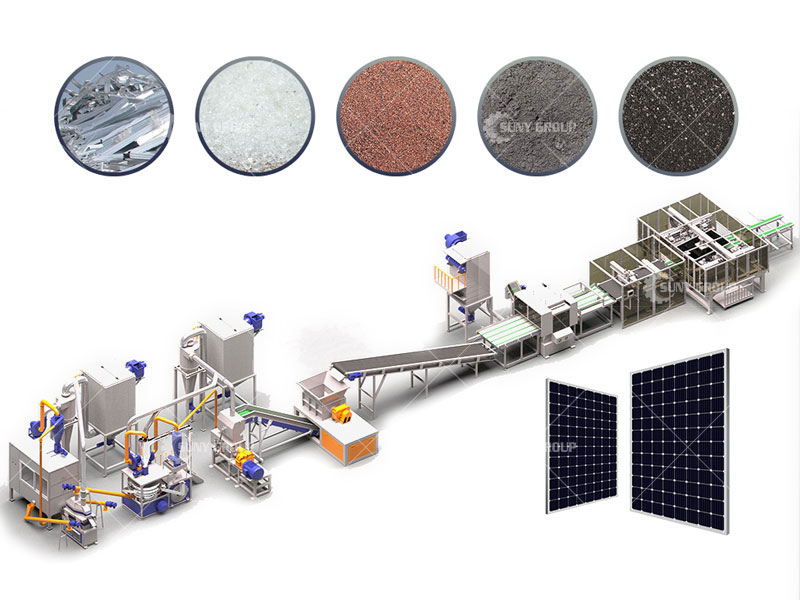
Solar panels contain valuable materials that can be reclaimed and reintroduced into industrial supply chains. The main materials recovered include:
Glass: High-volume component recycled for use in new solar panels or construction materials.
Aluminium frames: Easily recyclable into new aluminium products or construction materials.
Silicon chips: Recovered silicon can be processed, though its reuse in new PV cells is complex due to impurities.
Metals (Copper, Silver): Precious and industrial metals are extracted and re-injected into manufacturing supply chains.
By extracting these materials, Australia can reduce demand for virgin resources and support a circular economy for solar infrastructure.
Significance of Solar Panel Recycling for Australia
Solar panel recycling offers multiple strategic and environmental benefits for Australia:
Environmental Sustainability
Reduces landfill waste in a land-scarce city-state.
Cuts greenhouse gas emissions through material reuse.
Supports national targets under the Australia Green Plan 2030.
Economic Value and Resource Efficiency
Recovered materials reduce dependence on imported raw inputs.
Precious metals such as silver and copper have high market value.
Recycling supports a new industrial sector with job opportunities.
Regulatory Compliance and Corporate Responsibility
Compliance with RSA and EPR ensures legal e-waste disposal.
Helps businesses and project developers meet ESG reporting and sustainability standards.
Solar panel recycling in Australia is an emerging yet vital industry driven by the nation’s solar energy expansion and sustainability commitments. With advanced facilities capable of recovering most materials, supportive regulations, and clear environmental benefits, proper PV recycling not only mitigates waste but also reinforces Australia’s circular economy goals. As the volume of decommissioned panels rises over the coming decade, scaling up recycling capacity and innovation will be key to achieving sustainable clean energy adoption.