


Solar Panel Recycling Business Profitability
With the rapid global expansion of solar energy, the number of retired photovoltaic panels is increasing every year. This trend has created strong demand for solar panel recycling, making the solar panel recycling business profitability an important topic for investors and environmental companies. Recycling not only protects the environment but also generates significant economic returns by recovering valuable materials.
1. Feasibility of the Solar Panel Recycling Business
The solar panel recycling industry is becoming increasingly feasible due to several factors:
-
Growing volume of end-of-life panels: Solar panels typically have a lifespan of 25–30 years, and large quantities will reach retirement in the coming years.
-
Government regulations: Many countries have introduced policies encouraging or requiring solar panel recycling to reduce environmental impact.
-
High material recovery value: Solar panels contain valuable materials such as silicon, aluminum, copper, and silver.
-
Technological advancements: Modern recycling technologies allow efficient separation and recovery of these materials.
Because of these factors, the solar panel recycling industry is considered a promising long-term investment opportunity.
2. Solar Panel Recycling Business Profitability
Profitability mainly depends on recovered materials and processing efficiency. Key profit sources include:
-
Aluminum frame recovery: Aluminum frames can be easily removed and sold directly to metal recycling markets.
-
Glass recycling: Glass accounts for about 70–75% of a solar panel and can be reused in glass manufacturing.
-
Copper and silver recovery: Electrical circuits and busbars contain copper and small amounts of silver with high market value.
-
Silicon material recycling: High-purity silicon can be reused in photovoltaic manufacturing or electronics.
With efficient recycling equipment, recovery rates can exceed 85–95%, which significantly increases profit margins.
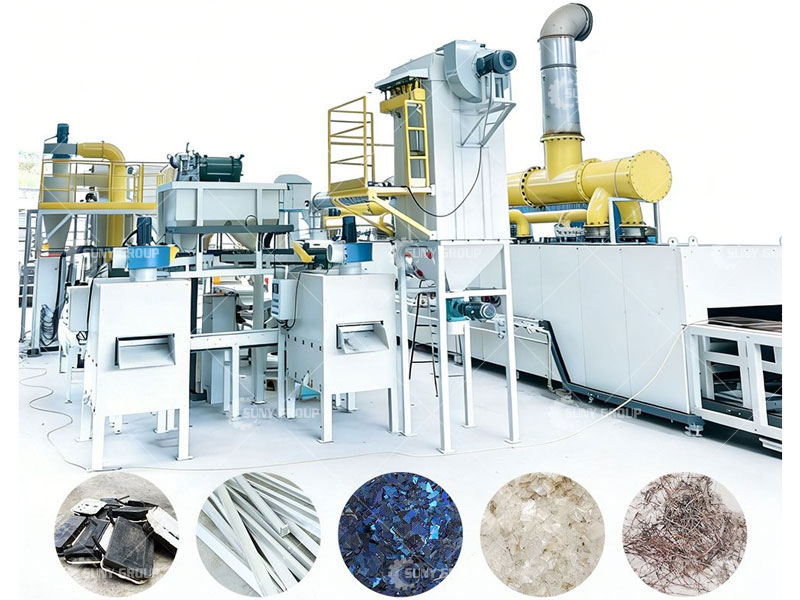
3. Solar Panel Recycling Line Configuration
A typical solar panel recycling line consists of several processing stages:
1.Frame Removal Machine
Removes the aluminum frame quickly and efficiently.
2.Solar Panel Glass Separation Machine
Separates tempered glass from the photovoltaic panel.
3.Crusher or Shredder
Breaks panels into smaller pieces for further separation.
4.Grinding and Milling System
Reduces materials to fine particles for easier sorting.
5.Airflow and Gravity Separation System
Separates light materials from metals.
6.Electrostatic Separator
Separates metals such as copper and aluminum from non-metal materials.
These machines work together to create a highly automated and efficient recycling process.
4. Applications of Recycled Solar Panel Materials
Recovered materials can be reused in multiple industries, increasing the overall value of the recycling process:
-
Aluminum: Used in construction materials, automotive parts, and packaging industries.
-
Glass: Reused in building materials, insulation products, or new solar panels.
-
Copper: Widely used in electrical cables, electronics manufacturing, and renewable energy systems.
-
Silicon powder: Used in photovoltaic production, semiconductors, and chemical industries.
-
Plastic and EVA materials: Can be processed into fuel or recycled plastic products.
5. Future Market Potential
The solar panel recycling market is expected to grow rapidly as more solar installations reach the end of their lifecycle. Industry experts predict that the global solar panel recycling market will reach billions of dollars in the next decade. Businesses investing in advanced recycling technology today may gain significant advantages in this emerging industry.
The solar panel recycling business profitability is driven by the increasing number of retired solar panels, high material recovery value, and strong environmental policies. With a well-designed recycling line and efficient technology, companies can recover valuable materials and supply them to multiple industries, making solar panel recycling both economically profitable and environmentally sustainable.
Next: