


Solar Panel Pyrolysis Recycling Equipment
As the global photovoltaic industry continues to expand, the volume of end-of-life solar panels is increasing year by year. Traditional mechanical recycling methods are sometimes limited when dealing with strongly bonded materials such as EVA film and backsheets. Solar panel pyrolysis recycling equipment has emerged as an advanced solution, using thermal decomposition technology to improve material recovery efficiency and environmental performance.
Introduction to Solar Panel Recycling Methods
There are several mainstream solar panel recycling methods currently used worldwide, including:
-
Manual dismantling: Removing aluminum frames and junction boxes
-
Mechanical crushing and separation: Breaking panels into particles for sorting
-
Thermal treatment and pyrolysis: Decomposing organic materials under high temperature
-
Chemical processing: Extracting valuable metals through chemical reactions
Among these methods, solar panel pyrolysis recycling equipment stands out due to its ability to effectively handle EVA encapsulation and polymer layers without using chemical solvents.
Characteristics and Advantages of the Pyrolysis Process
Pyrolysis is a thermal process in which organic materials are decomposed at high temperatures in an oxygen-free or low-oxygen environment. When applied to solar panel recycling, the pyrolysis process offers several key advantages:
-
Efficient EVA Removal: EVA film and backsheet materials are completely decomposed
-
High Material Purity: Glass and silicon cells remain clean and uncontaminated
-
Chemical-Free Process: No acids or solvents are required
-
Lower Environmental Impact: Reduced secondary pollution compared to chemical recycling
-
Energy Recovery Potential: Pyrolysis gases and oils can be reused as fuel
These advantages make pyrolysis an increasingly popular choice for advanced PV recycling plants.
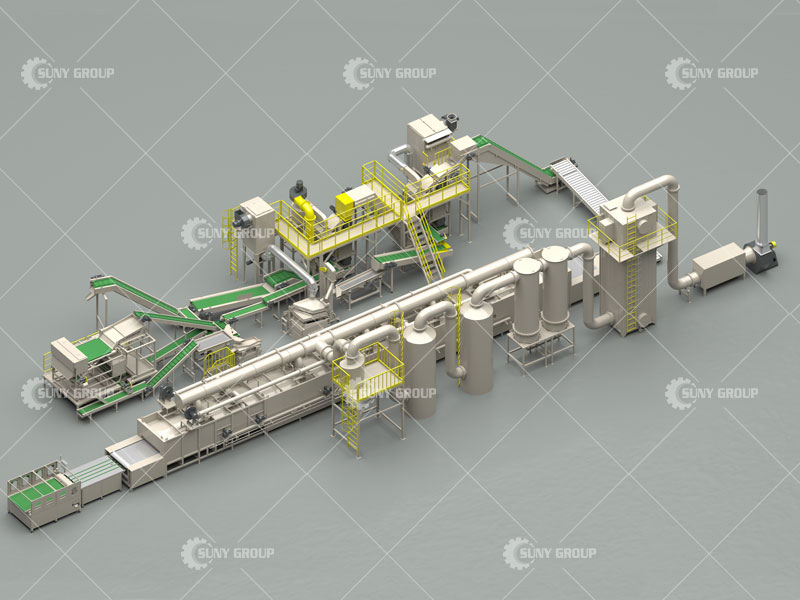
Equipment Configuration of Solar Panel Pyrolysis Recycling Systems
A complete solar panel pyrolysis recycling equipment system typically includes the following components:
-
Pre-Treatment Unit
Aluminum frames and junction boxes are removed to improve thermal efficiency. -
Pyrolysis Reactor
The core unit where solar panels are heated under controlled temperature conditions to decompose EVA and polymers. -
Heating System
Electric, gas, or biomass-assisted heating provides stable and adjustable thermal energy. -
Gas Collection and Condensation System
Pyrolysis gas is collected, cooled, and converted into reusable oil or fuel gas. -
Dust Removal and Gas Purification System
Filters and scrubbers ensure emissions meet environmental standards. -
Cooling and Discharge System
Recovered glass and silicon materials are safely cooled and discharged for further processing.
This modular configuration allows the system to be customized based on plant capacity and regulatory requirements.
Final Products from Pyrolysis Recycling of Solar Panels
After processing with solar panel pyrolysis recycling equipment, several valuable final products can be obtained:
-
High-Purity Glass
Suitable for reuse in construction materials, glass manufacturing, or insulation products. -
Silicon Cells and Silicon Powder
Can be refined and reused in metallurgical or photovoltaic industries. -
Pyrolysis Oil and Gas
Used as supplementary fuel to reduce overall energy consumption. -
Recovered Metals
Copper, silver, and aluminum components can be further separated and sold.
These final products significantly enhance the economic value of solar panel recycling.
Environmental and Economic Significance
Using solar panel pyrolysis recycling equipment contributes to both environmental protection and economic sustainability by:
-
Reducing landfill waste from retired PV modules
-
Lowering carbon emissions through energy recovery
-
Supporting circular economy development
-
Increasing overall recycling profitability
Solar panel pyrolysis recycling equipment represents an advanced and efficient solution for processing end-of-life photovoltaic modules. By leveraging the advantages of the pyrolysis process, this technology enables clean separation of materials, high recovery rates, and environmentally responsible recycling. As global regulations tighten and solar waste volumes grow, pyrolysis-based recycling systems will play a critical role in the future of the photovoltaic recycling industry.
Next: