


Solar Panel Line Recycling
The rapid growth of the global photovoltaic industry has led to a sharp increase in end-of-life solar panels. Early-installed systems are now reaching their 20–30 year service life, while damaged, outdated, or defective panels are continuously being replaced. As solar energy adoption accelerates worldwide, the volume of waste solar panels is rising significantly, creating both environmental pressure and valuable recycling opportunities.
1. Valuable Materials in Waste Solar Panels
Waste solar panels contain a high proportion of recyclable and valuable materials, making them ideal for resource recovery:
- Glass (70–75%) – reusable in construction and manufacturing
- Aluminum frame (10–15%) – high resale value
- Silicon (3–5%) – reusable in solar and semiconductor industries
- Copper and silver (1–2%) – precious and highly profitable metals
- Plastics (EVA, backsheet) – partially recyclable
With advanced technology, up to 85–95% of materials can be recovered.
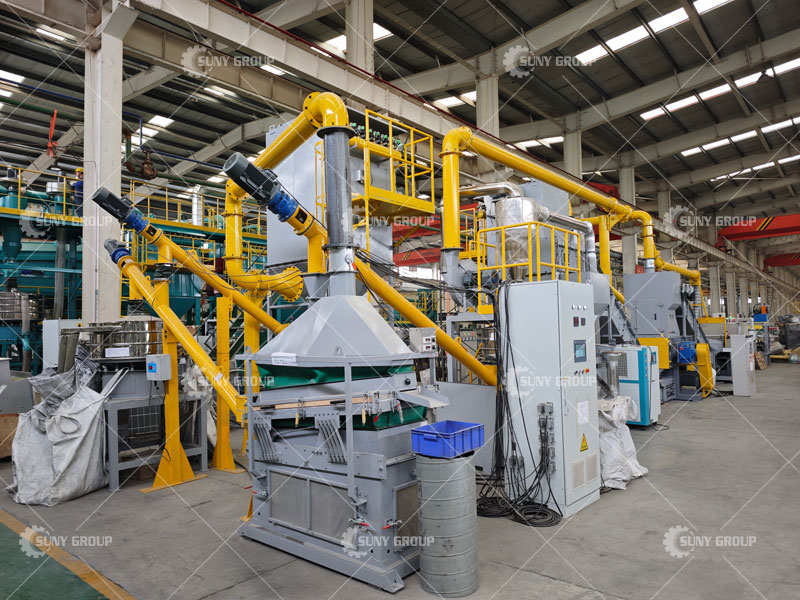
2. Solar Panel Recycling Line Configuration
A complete solar panel recycling line is designed for automated and efficient processing. The typical configuration includes:
- Dismantling system – removes aluminum frames and junction boxes
- Shredding and crushing unit – reduces panel size
- Separation system – separates glass, metals, and silicon
- Thermal or chemical treatment – removes EVA encapsulation
- Refining system – improves purity of recovered materials
This setup ensures continuous operation and high output efficiency.
3. Recycling Efficiency and Recovery Rate
Modern solar panel recycling lines deliver excellent recovery performance:
- Glass recovery rate: ≥95%
- Metal recovery rate: ≥90%
- Overall recycling rate: up to 90–95%
High automation minimizes labor costs and ensures stable, large-scale production.
4. Advantages of Solar Panel Recycling
Investing in a solar panel recycling line provides multiple advantages:
- Environmental protection: reduces landfill waste and pollution
- Resource conservation: recovers valuable raw materials
- Policy support: governments encourage green recycling projects
- Market demand: increasing supply of waste panels ensures raw materials
5. Profit Potential and ROI
A solar panel recycling line offers strong financial returns for investors. Revenue sources include:
- Sales of recovered aluminum, glass, copper, and silver
- Recovered silicon for industrial reuse
- Processing and recycling service fees
Depending on plant size and local market conditions, investors can typically achieve a return on investment (ROI) within 1–3 years. With the continuous increase in photovoltaic waste and rising material prices, profit margins are expected to grow steadily.
Solar panel recycling lines are becoming essential in the renewable energy industry. With high recovery rates, strong market demand, and attractive profit potential, they represent a sustainable and lucrative investment opportunity. Choosing advanced technology and a reliable supplier will help maximize efficiency and long-term returns.