


Solar Glass and Aluminum Frame Recycling Line
1. Why Decommissioned Solar Panels Are Increasing Rapidly
In recent years, the number of decommissioned solar photovoltaic panels has increased significantly worldwide. Most solar panels have a service life of 20–30 years, and large-scale photovoltaic projects installed in the early 2000s are now entering the retirement phase. In addition, technological upgrades, efficiency improvements, and damage caused by extreme weather accelerate panel replacement. As a result, managing end-of-life solar panels has become a global environmental and economic challenge, driving strong demand for a professional solar glass and aluminum frame recycling line.
2. Importance of Recycling Solar Glass and Aluminum Frames
Solar panels mainly consist of glass and aluminum frames, which together account for over 80% of the total panel weight. Recycling these materials has significant value and meaning. Solar glass is a high-quality, low-iron glass that can be reused in construction and industrial applications. Aluminum frames are made from recyclable aluminum, which retains its value through repeated recycling. Recovering these materials reduces landfill pressure, conserves natural resources, and lowers carbon emissions associated with primary mining and smelting. Therefore, a solar glass and aluminum frame recycling line plays a key role in sustainable photovoltaic waste management.
3. Economic Value of Solar Glass and Aluminum Recycling
The economic potential of recycling solar glass and aluminum frames is substantial. Recycled aluminum requires up to 95% less energy than producing primary aluminum from bauxite ore, making it highly profitable. Solar glass, once properly separated and cleaned, can be reused or remelted at a lower cost compared to producing new glass from raw minerals. With the growing volume of retired solar panels, recycling lines offer a stable supply of secondary raw materials and create long-term economic returns for recycling operators.
4. Configuration of a Solar Glass and Aluminum Frame Recycling Line
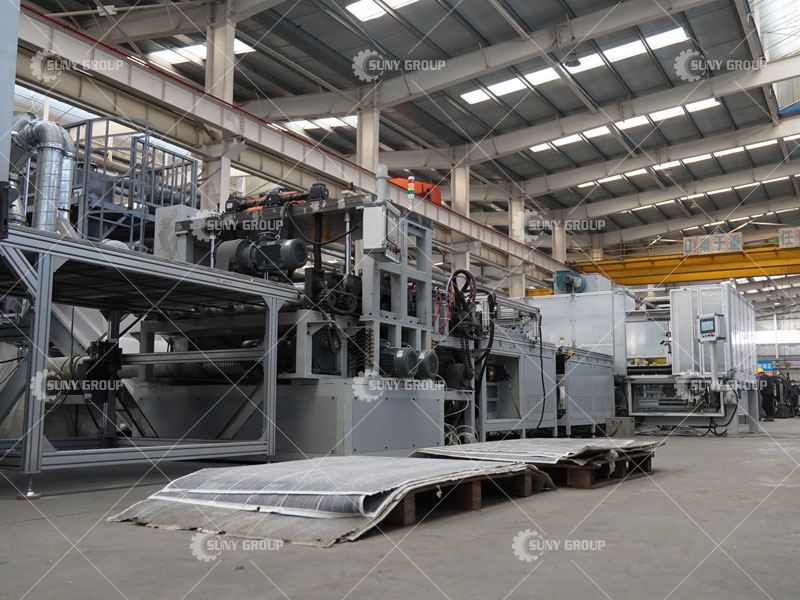
A typical solar glass and aluminum frame recycling line is designed for efficient separation and recovery of materials. The process usually starts with a frame removing machine to detach the aluminum frame from the panel. The recovered aluminum is then compressed or baled for storage and sale. Next, the panel glass is separated using crushing, screening, and cleaning systems. Advanced recycling lines may include dust removal systems, magnetic separators, and automated control units to ensure high purity and operational safety. This modular configuration allows flexible capacity adjustment based on project scale.
5. Recycling Process and Material Output
After processing through the recycling line, aluminum frames are obtained in clean, reusable form, while solar glass is separated into uniform particles or sheets. The high separation efficiency ensures minimal contamination between materials. Modern solar glass and aluminum frame recycling lines are designed to minimize material loss and energy consumption while maintaining stable output quality. This makes the recycling process both environmentally friendly and commercially viable.
6. Industries Using Recycled Solar Glass and Aluminum
Recycled aluminum frames are widely used in construction, transportation, machinery manufacturing, and new aluminum product production. Recycled solar glass is commonly applied in building materials, glass insulation products, road construction aggregates, and industrial glass manufacturing. By supplying these industries with recycled materials, a solar glass and aluminum frame recycling line supports the circular economy and promotes sustainable industrial development.
Next: