


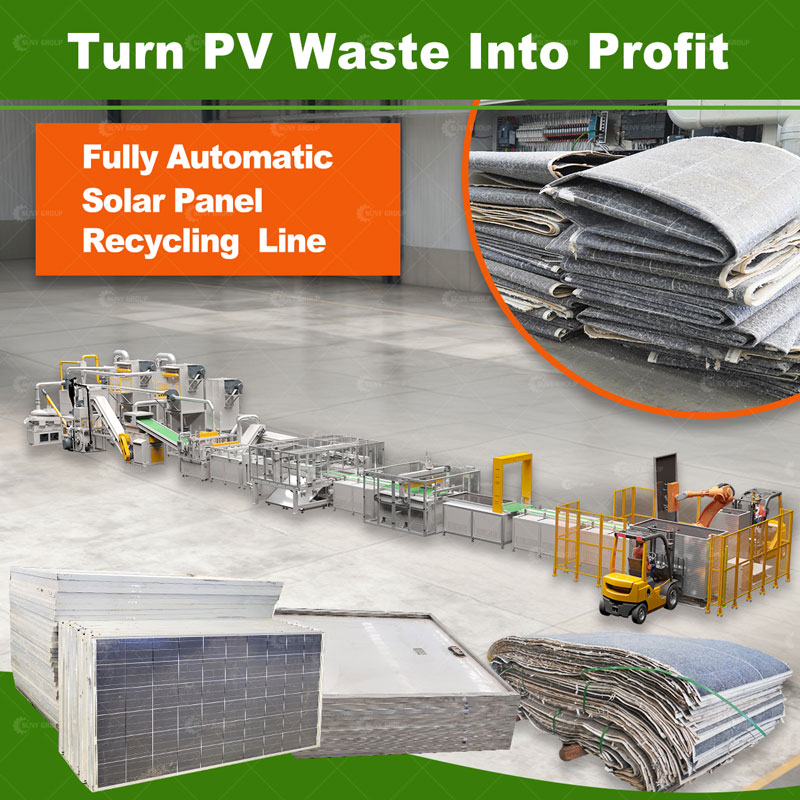
Fully Automatic Solar Panel Recycling Line
As global photovoltaic installations continue to grow, the demand for efficient recycling equipment has increased rapidly. A Fully Automatic Solar Panel Recycling Line is designed to recover glass, silicon cells, metals, and other valuable materials from end-of-life panels. This advanced recycling solution helps manufacturers, waste management companies, and renewable energy facilities handle large-scale PV waste safely and sustainably.
1. Introduction to Fully Automatic Solar Panel Recycling Lines
A fully automatic recycling line is a highly engineered system capable of deconstructing solar panels without manual intervention. Unlike traditional methods that rely on manual separation or simple crushing, a modern automated line uses precision equipment to remove frames, junction boxes, glass, encapsulant, and semiconductor materials. Its core purpose is to maximize recovery rates while ensuring environmental compliance.
2. Key Technologies Used in a Fully Automated Recycling Process
Several advanced technologies make the automated system efficient and reliable:
-
Automated frame removal machines
-
Glass separation and peeling units
-
High-speed shredding and particle-size classification
-
Electrostatic and density separation systems
-
Dust collection and filtration modules
These technologies guarantee stable operation, protect worker safety, and help achieve high-purity material recovery.
3. Step-by-Step Workflow of a Fully Automatic Solar Panel Recycling Line
A complete recycling line typically includes the following stages:
-
Automatic Frame Removal – The aluminum frame is detached without damaging inner layers.
-
Junction Box Separation – Cables and junction boxes are removed for copper recovery.
-
Glass Delamination or Peeling – Front glass is separated from EVA film and cells.
-
Crushing and Shredding – Remaining layers are shredded into smaller particles.
-
Material Separation – Electrostatic, magnetic, and airflow separation systems classify glass, silicon, silver, and metals.
-
Collection and Packaging – Recovered materials are stored for resale or reuse.
This fully automated workflow reduces labor intensity and increases operational efficiency.
4. Environmental Benefits of Automated Solar Panel Recycling
A Fully Automatic Solar Panel Recycling Line significantly reduces landfill waste by extracting usable materials from old panels. Recovered aluminum and glass can be reintroduced into manufacturing, lowering the demand for primary resources. Automated processes also reduce harmful emissions by eliminating the need for high-temperature incineration. The overall carbon footprint of solar panel disposal is minimized, supporting a greener photovoltaic supply chain.
5. Industrial Applications and Market Demand for Recycling Lines
As solar installations mature, many countries are enforcing strict laws on PV waste management. Utility-scale solar farms, recycling centers, and renewable energy companies are increasingly investing in automated recycling technology. The market demand continues to rise due to:
-
PV module aging and end-of-life expansion
-
Government recycling regulations
-
Growing interest in circular economy practices
-
The need for material recovery to support new solar production
These trends make automated recycling lines essential equipment for future energy industries.
6. How to Choose a Reliable Fully Automatic Solar Panel Recycling Line
When selecting a recycling line, buyers should consider processing capacity, material recovery rates, automation level, equipment durability, and supplier service. A reliable system must offer consistent performance, modular components, and compliance with international safety standards. Choosing a reputable manufacturer ensures long-term stability, efficient maintenance, and higher return on investment.
A Fully Automatic Solar Panel Recycling Line is critical for handling the rising volume of PV waste. With advanced technology, high recovery rates, and strong environmental advantages, it provides a complete solution for the sustainable development of the solar industry.