


Complete Solar Panel Recycling Plant Cost and Solution
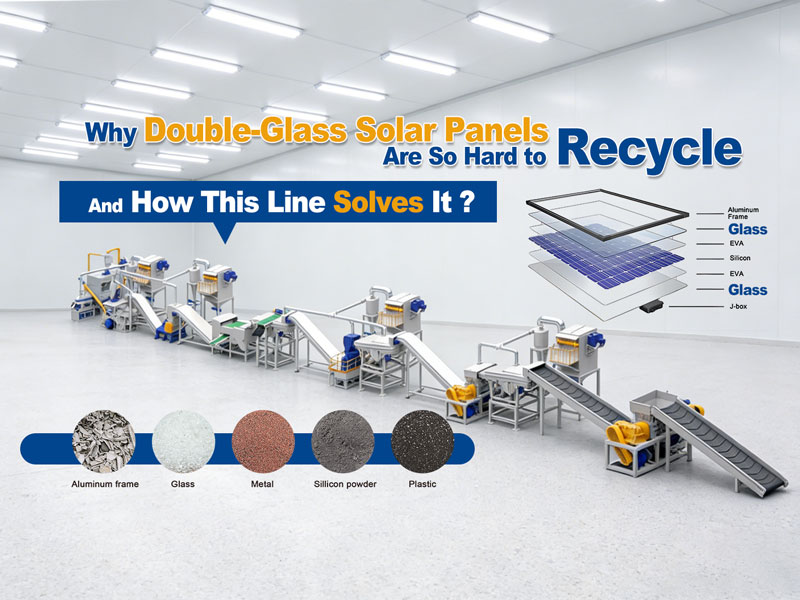
With the rapid growth of photovoltaic (PV) installations, end-of-life solar panels are becoming a major global waste sour offers a sustainable and profitable solution by recovering valuable materials such as glass, aluminum, silicon, and silver.
1. Sources of Waste Solar Panels
Waste photovoltaic panels mainly come from the following channels:
-
Decommissioned solar power plants (20–30 years lifespan)
-
Damaged panels during transportation or installation
-
Manufacturing defects and scrap modules
-
Early replacements due to efficiency upgrades
As global solar capacity expands, millions of tons of PV waste are expected in the coming decades, creating a huge recycling market.
2. Recycling Value of Solar Panels
Solar panels contain multiple recyclable materials with significant economic value:
-
Glass (70–76%) – reusable in construction or new panels
-
Aluminum (8–10%) – high resale value
-
Silicon (3–5%) – reusable in photovoltaic or electronics
-
Copper (≈1%) – used in electrical systems
-
Silver (≈0.02%) – highly valuable precious metal
Although silver content is small, it contributes strongly to profitability. Efficient recovery technologies can significantly increase revenue.
3. Complete Solar Panel Recycling Plant Solution
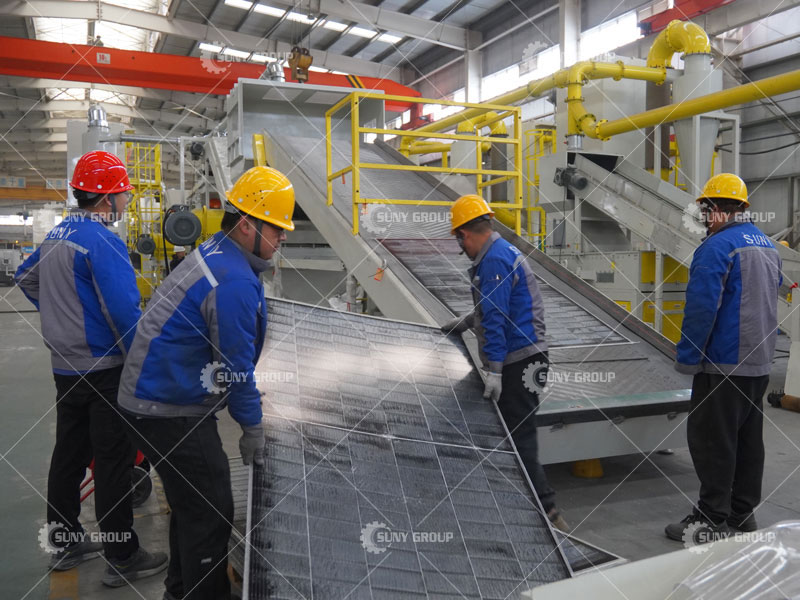
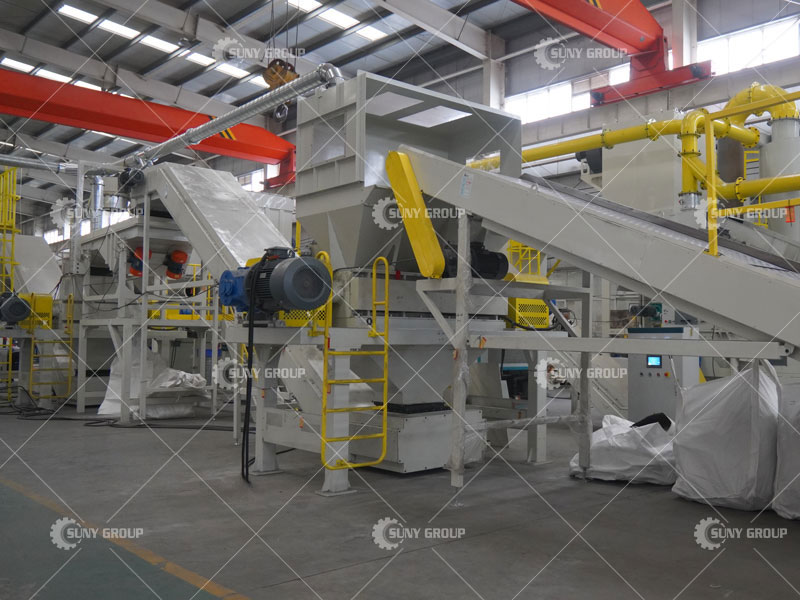
A fully automated recycling line typically includes:
(1) Pre-processing System
-
Frame removal machine
-
Junction box separation
-
Manual or automated sorting
(2) Mechanical Processing System
-
Shredder / crusher
-
Hammer mill
-
Vibrating screen
(3) Separation System
-
Magnetic separator
-
Airflow separator
-
Electrostatic separation
(4) Advanced Recovery System
-
Thermal delamination furnace
-
Chemical leaching unit (for silicon & silver recovery)
(5) Environmental Protection System
-
Dust collection system
-
Wastewater treatment
-
Exhaust gas purification
This integrated system ensures high recovery efficiency (up to 90–95% in advanced plants) .
4. Solar Panel Recycling Plant Cost
(1) Equipment Investment
-
Small-scale plant: $80,000 – $150,000
-
Medium-scale plant: $200,000 – $600,000
-
Large industrial plant: $800,000 – $2.5 million
(2) Cost Breakdown
-
Equipment: 50–60%
-
Infrastructure: 20–30%
-
Labor & training: 10–15%
(3) Operating Costs
-
Recycling cost: $15–45 per panel
-
Utilities: $10,000–50,000/month
-
Maintenance: $50,000–200,000/year
5. Recycling Process (Step-by-Step)
-
Collection and transportation
-
Manual dismantling (frame & junction box removal)
-
Crushing and shredding
-
Physical separation (glass, metals)
-
Thermal/chemical treatment
-
Material refining and reuse
6. Advantages of a Complete Recycling Solution
Economic Benefits
-
Recovery of high-value metals (silver, aluminum)
-
Long-term profit potential with scale
Environmental Benefits
-
Reduces landfill waste
-
Minimizes toxic pollution
-
Supports circular economy
Technical Advantages
-
High automation reduces labor cost
-
Recovery rate up to 90%+
-
Flexible configurations for different capacities
Policy & Market Advantages
-
Supported by global environmental regulations
-
Increasing demand due to solar waste growth
A complete solar panel recycling plant is a future-oriented investment combining environmental protection and resource recovery. Although initial costs can be high, advancements in technology and increasing waste volumes are making this industry more profitable. Businesses that adopt efficient, automated recycling solutions will gain a strong competitive advantage in the growing green economy.