


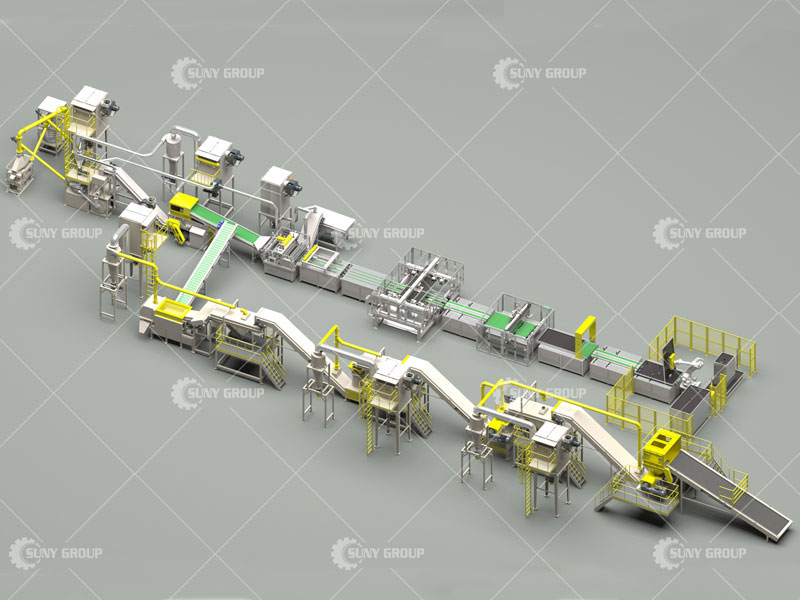
Complete Line at Photovoltaic Panels
Complete line at photovoltaic panels reflects an emerging industrial focus on both solar power deployment and end-of-life management. Photovoltaic panels are being installed at unprecedented rates around the world due to the global push for renewable energy, decreasing costs, and supportive policies. With this rapid growth comes the critical need for efficient recycling solutions.
Why Photovoltaic Panels Are Increasing
-
Growing Demand for Renewable Power:
Photovoltaic panels convert sunlight into electricity without greenhouse gas emissions. As countries aim to reduce carbon emissions, solar power has become one of the fastest-growing renewable energy sources. -
Falling Costs:
Over the past decade, the cost of manufacturing photovoltaic panels has dropped significantly due to scaling, technology improvements, and better supply chains. Lower prices drive more installations in residential, commercial, and utility markets. -
Government Policies & Incentives:
Many governments offer subsidies, tax incentives, or clean energy mandates that encourage solar adoption. These policies accelerate market growth and long-term solar deployment. -
Energy Security:
Solar energy reduces reliance on imported fossil fuels. Homeowners and nations invest in photovoltaic systems for decentralized power independence.
Why Photovoltaic Panel Recycling Is Important
Recycling photovoltaic panels is necessary for several reasons:
-
Environmental Protection:
Solar panels contain materials like lead and silver that can be harmful if disposed of in landfills. Recycling prevents soil and water contamination. -
Resource Recovery:
Valuable materials in solar panels, such as silicon, silver, copper, and aluminum, can be reused instead of mined again. This lowers environmental impact and conserves finite resources. -
Economic Value:
Recovered materials have commercial value and reduce raw material costs for manufacturers, contributing to a circular economy. -
Regulatory Requirements:
As waste regulations tighten globally, manufacturers and consumers will be required to manage panel disposal responsibly.
Valuable Materials in Photovoltaic Panels
Photovoltaic panels are composed of materials that have economic and recycling value:
-
Silicon (Si):
The primary semiconductor in most solar cells, accounting for 90%+ of panel content by weight. -
Silver (Ag):
Used in conductive pastes and contacts; one of the most valuable recoverable metals. -
Aluminum (Al):
Commonly used in panel frames and easily recyclable. -
Copper (Cu):
Found in wiring and connectors; high recycling value. -
Glass:
Solar panel glass can be reused in new panels or other glass products.
Other materials like plastics, rare metals, and encapsulants may require specialized processing.
Current Photovoltaic Recycling Technologies and Process Lines
Recycling technology for photovoltaic panels continues to evolve. Current systems typically include the following steps:
-
Manual Dismantling:
Frames, junction boxes, and cables are removed manually to separate high-value components. -
Thermal & Chemical Delamination:
Panels are heated or chemically treated to separate the encapsulant (EVA/POE) from glass and cells. -
Mechanical Crushing & Sorting:
Once delaminated, panels are crushed, and components such as glass, silicon, metals, and polymers are separated using sieves, magnets, and air classifiers. -
Advanced Material Recovery:
-
Silicon: Recovered using chemical etching and purification.
-
Silver/Copper: Extracted through hydrometallurgical or electrochemical techniques.
-
Glass & Aluminum: Cleaned, sorted, and sent to material streams for remanufacture.
-
-
Automated Recycling Lines:
Modern recycling plants integrate robotics, conveyor systems, and advanced sorting technologies to improve throughput and reduce labor costs.
Uses of Recovered Materials
Recycled materials from photovoltaic panels have broad applications:
-
Recycled Glass: Used in new solar panels or construction glass products.
-
Recovered Silicon: Refined back into electronic-grade or solar-grade silicon.
-
Metals (Ag, Cu, Al): Melted and reused in electronics, automotive, and industrial components.
-
Polymers: Repurposed for plastics manufacturing or energy recovery.
The global boom in photovoltaic panel installations brings sustainability benefits but also challenges related to end-of-life management. Recycling photovoltaic panels not only protects the environment but also unlocks economic value through material recovery. With continued technological improvements and investment in recycling infrastructure, photovoltaic panel recycling will become a standard part of the solar industry’s lifecycle.
Next: